







How to Choose Front Lights for Theatre
How to Choose Front Lights for Theatre
Front lighting is one of the most important elements of a professional theatre lighting system. It helps audiences see performers clearly, reveals facial expressions, and makes costumes and stage details easier to recognize. The right front lights can improve visibility without creating harsh shadows or distracting glare.
However, choosing theatre front lights involves more than comparing wattage or brightness. Beam coverage, color temperature, color rendering, dimming performance, operating noise, and installation distance all affect the final result. This guide explains what theatres, studios, schools, and lighting professionals should consider when selecting LED front lights.
Kingbird Lighting is a stage lighting manufacturer based in Guangzhou, China, with over 12 years of OEM/ODM experience. We provide professional lighting solutions for theatres, studios, and entertainment venues, supporting distributors and lighting brands with product selection and manufacturing services.
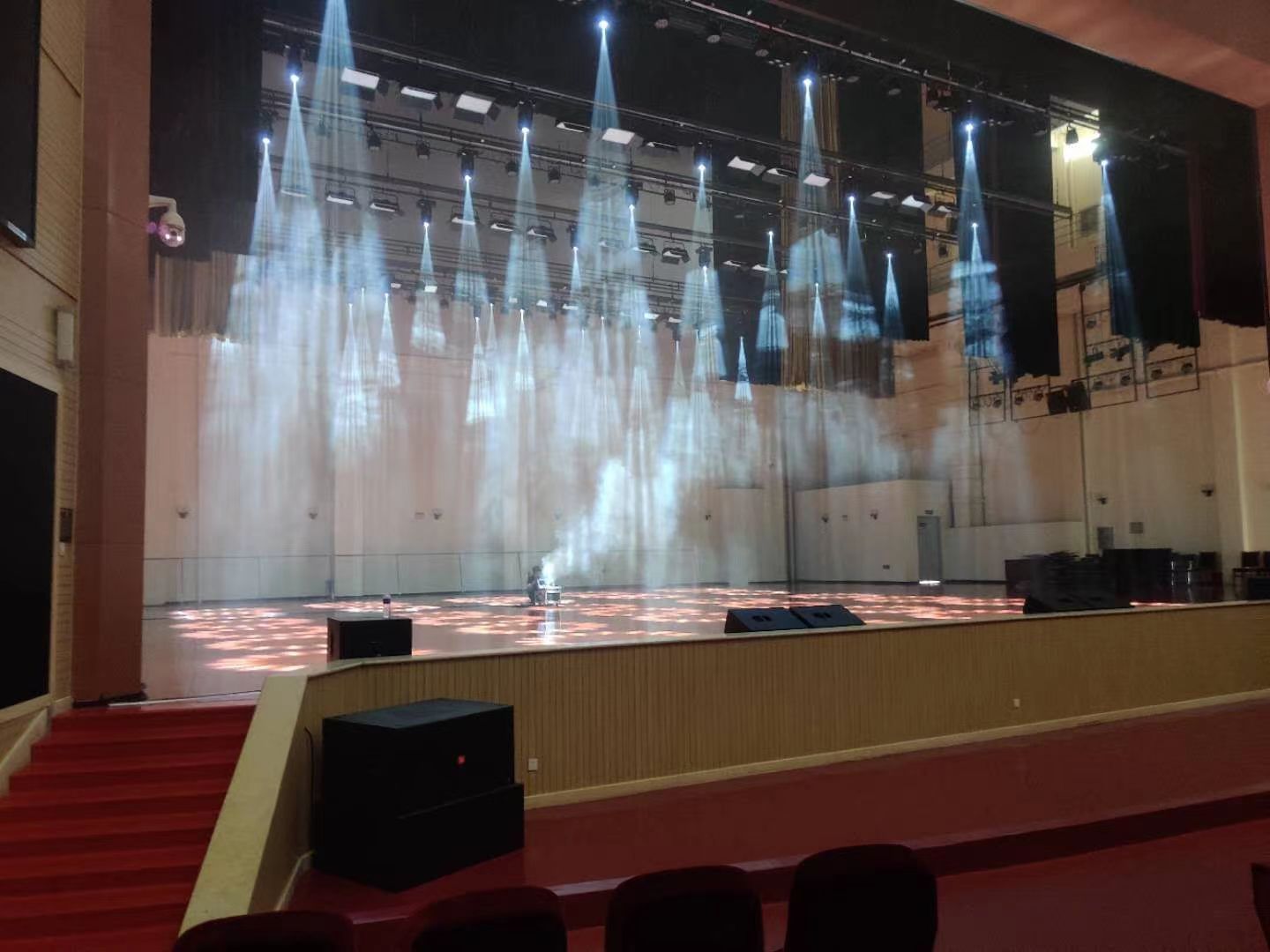
1. Understand the Purpose of Theatre Front Lighting
The main purpose of front lighting is to illuminate performers from the audience side of the stage. It makes facial expressions visible and helps maintain a natural appearance throughout a performance. Front lighting is commonly used in theatres, school auditoriums, churches, conference halls, and television studios.
Different venues have different lighting requirements. A small school stage may need a straightforward, reliable white-light system, while a professional theatre may require more precise color control, flexible beam adjustment, and consistent output across a large performance area.
Before selecting equipment, consider the stage dimensions, ceiling height, lighting positions, audience sightlines, and types of performances. These details help determine the appropriate fixture type, output, beam angle, and number of lights required.
2. Choose the Right Type of LED Front Light
LED Fresnel lights and LED profile lights are two common choices for theatre front lighting. Although both can illuminate performers, they produce different lighting effects. Fresnel lights are generally suited to soft, even illumination, while profile lights provide more precise beam shaping.
LED Fresnel Lights for Soft Front Lighting
LED Fresnel lights are widely used in theatres, studios, auditoriums, and multipurpose venues where smooth light distribution is important. Their adjustable beam helps lighting designers cover performers evenly and blend light from multiple fixtures.
For venues that need flexible color control, the 400W RGBLAC LED Fresnel Light is worth considering. RGBLAC technology provides a broad range of color options for productions that require both white light and colored effects. When evaluating this model, check its available color temperature range, zoom range, color rendering, and control options against your venue's requirements.
For projects that require adjustable white light rather than a full-color system, the 400W 2-in-1 LED Fresnel Light offers another option to evaluate. Compare the available white-light settings, beam adjustment, and control functions to determine whether the fixture matches your stage lighting design.
If you are comparing different power ratings and configurations, visit the LED Fresnel Lights product range. Reviewing the available models together can help you select suitable fixtures for different stage sizes, installation distances, and lighting requirements.
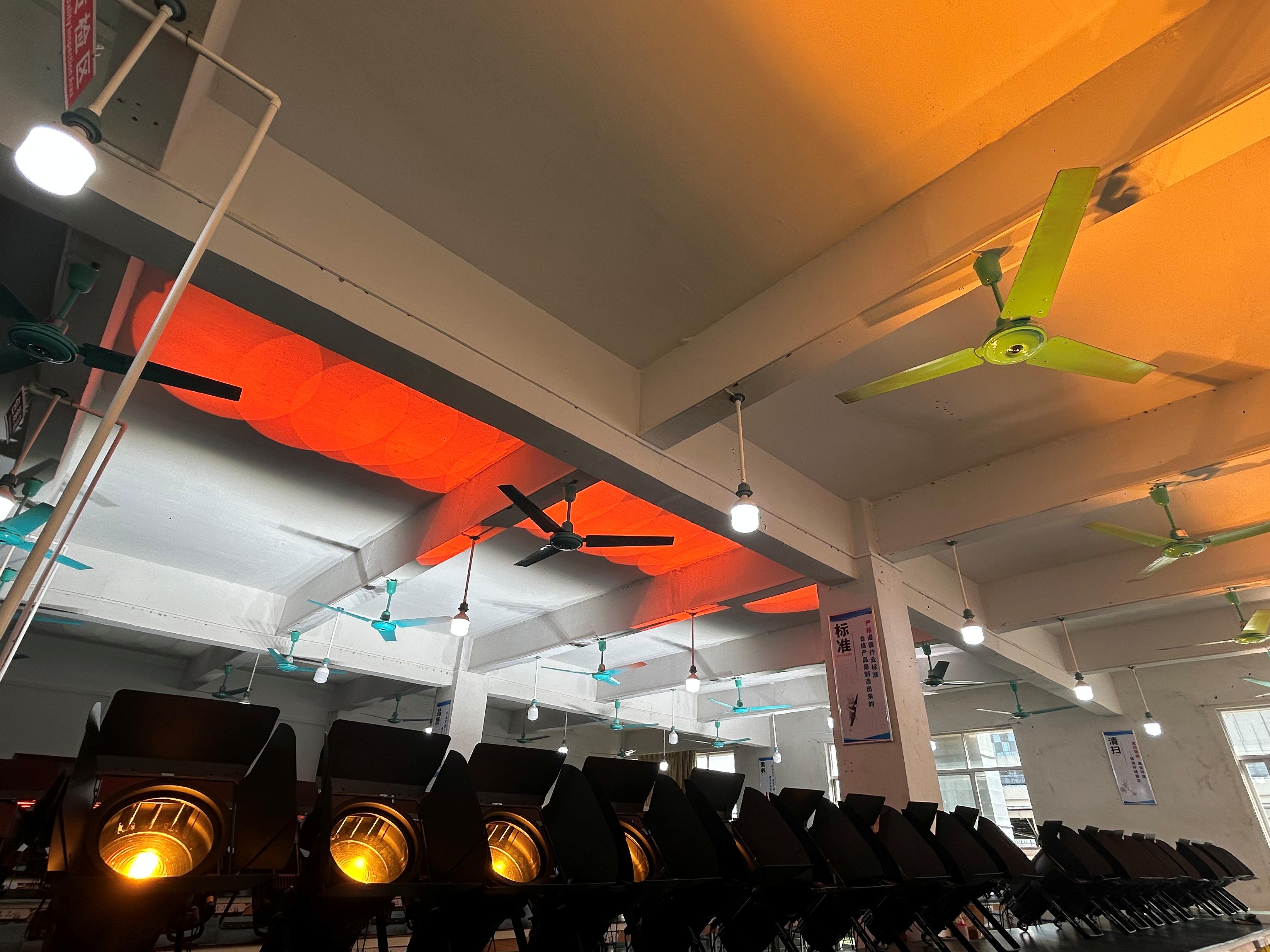
LED Profile Lights for Precise Beam Control
LED profile lights, also known as ellipsoidal spotlights or Leko lights, are designed for applications that require controlled beams and defined lighting areas. Framing shutters allow lighting technicians to shape the beam, while a gobo slot can be used for pattern projection when supported by the fixture.
For applications that require adjustable beam coverage, the 400W 2-in-1 Leko Profile Zoom Light is an option to consider. A zoom profile fixture can provide flexibility when the lighting position or the size of the illuminated area changes. Check the product specifications to confirm the available zoom range, lens options, and control functions for your application.
The 300W LED Ellipsoidal Light is another product range to consider for theatre and studio applications. Choosing a suitable output level can help balance lighting performance, installation distance, and project budget.
For projects that require a higher-power profile fixture, explore the 400W LED Leko Profile Light. When comparing profile lights, pay attention to the optical system, lens compatibility, beam angle, framing capability, and the type of light output required for your production.
If a production requires both precise beam shaping and full-color lighting, the 400W RGBLAC Leko Profile Light is another model to investigate. A full-color profile fixture can be useful when a lighting design combines controlled illumination with changing colors and more creative effects. Review the product specifications to confirm its optical configuration and available control functions.
For general front lighting, a Fresnel fixture may be the practical choice. When a production requires sharper beam boundaries or precise control over the illuminated area, a profile light may be more suitable. Many professional venues combine both types to achieve balanced and flexible lighting.
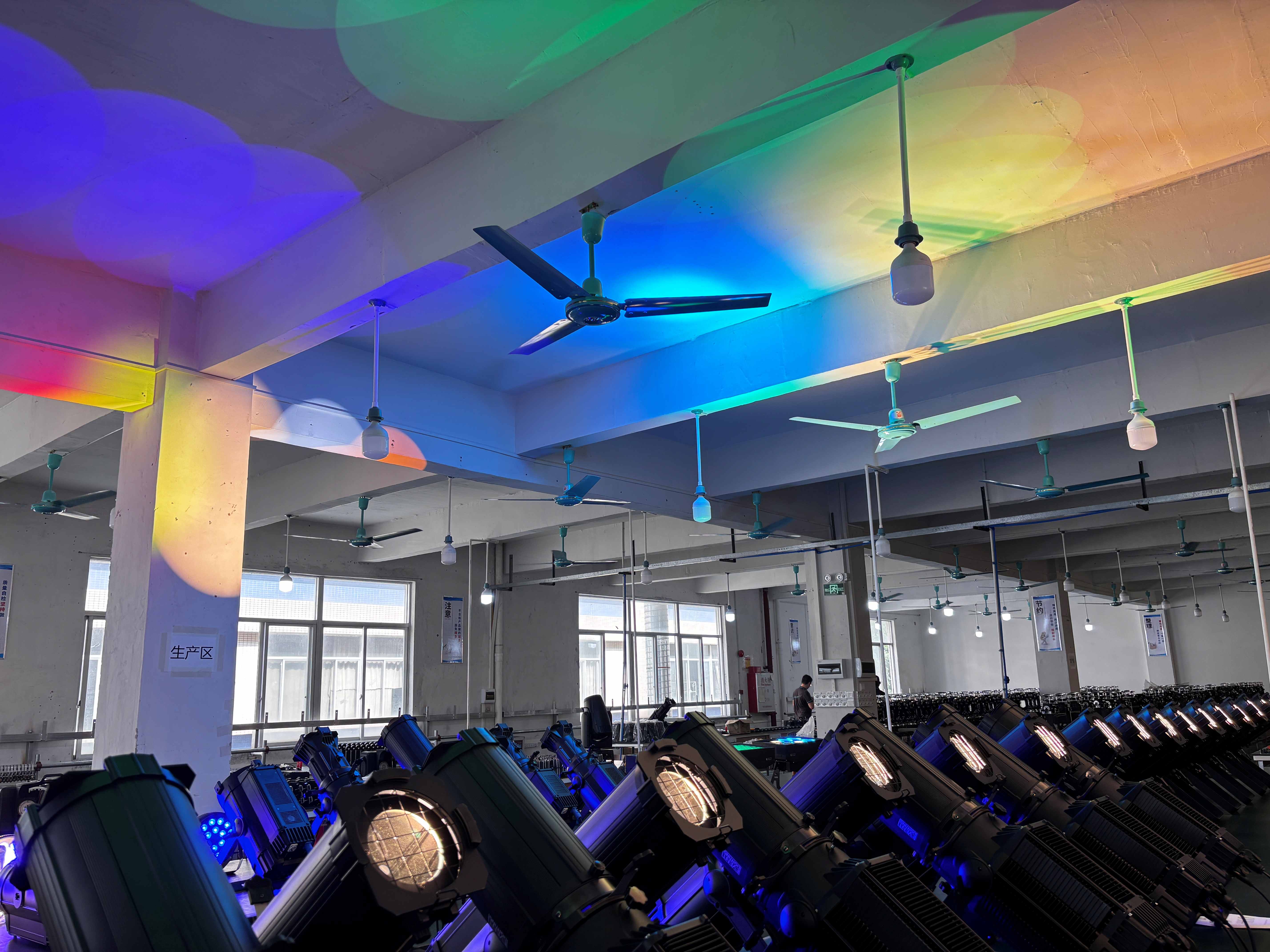
3. Select the Appropriate Beam Angle and Throw Distance
Beam angle determines how widely a fixture spreads its light, while throw distance affects the illuminated area and the amount of light reaching the stage. Both factors should be considered together when selecting theatre front lights.
A narrower beam can help concentrate light over a longer distance, while a wider beam is useful for covering a larger area at shorter distances. A fixture with an adjustable zoom range can offer greater flexibility when the stage layout or lighting position changes.
For example, a small auditorium with lights installed relatively close to the stage may benefit from wider beam coverage. A larger theatre with fixtures mounted farther away may need a different beam angle or higher light output.
When comparing fixtures, consider the optical design as well as the power rating. The 400W RGBLAC Fresnel Light and the 400W 2-in-1 Leko Profile Zoom Light serve different lighting purposes. A Fresnel fixture is generally suited to softer coverage, while a profile fixture offers more controlled beam shaping.
Whenever possible, review the manufacturer's photometric data and test the fixture at the intended installation distance. This helps you estimate the required number of lights and avoid uneven coverage or unnecessary overlighting.
4. Consider Color Temperature and Color Rendering
Color temperature affects the appearance of white light. Warm white light can create a softer, warmer atmosphere, while cooler white light may be suitable for applications that require a cleaner or more neutral appearance.
For venues that host different types of performances, bi-color LED front lights can provide useful flexibility by allowing the operator to adjust the color temperature. Full-color models may be appropriate when the lighting system also needs to produce colored effects.
For example, the 400W 2-in-1 Fresnel Light may be suitable for projects that prioritize adjustable white light, while the 400W RGBLAC Fresnel Light is worth considering when a wider range of colors is required. Always check the individual product specifications to confirm the available color modes and temperature range.
Color rendering is equally important. A high Color Rendering Index (CRI) helps reproduce skin tones, costumes, and stage scenery more naturally. For professional theatre and studio applications, CRI 90 or higher is often a useful starting point, although the actual requirements depend on the production.
If the lights will be used for television, livestreaming, or video recording, consider additional color-quality measurements and test the fixtures on camera. Stable color performance across different brightness levels is also worth checking.
When precise beam control is also important, a full-color profile fixture such as the 400W RGBLAC Leko Profile Light may be worth evaluating alongside a full-color Fresnel. The choice depends on whether your application prioritizes soft coverage or a more defined beam.
5. Check Dimming Performance and Lighting Control
Theatre lighting often changes gradually during a performance. Front lights should therefore provide smooth dimming so that lighting transitions appear natural and do not distract the audience.
Before purchasing, check the supported control options, such as DMX512 and any available onboard controls. Make sure the fixtures are compatible with the venue's existing lighting console and control system.
It is also important to evaluate color consistency when dimming. Some applications require the white light to maintain a consistent appearance as brightness changes. For video production, test for visible flicker at different dimmer levels and camera settings.
For distributors and lighting designers comparing products from the same manufacturer, reviewing the technical specifications of the LED Fresnel Lights range and the 300W LED Ellipsoidal Light range can help identify suitable options for different lighting positions and control requirements.
6. Pay Attention to Operating Noise and Cooling
Noise can be an important consideration in theatres, recording studios, broadcast studios, and other quiet environments. Fans that are clearly audible during a performance or recording may affect the audience experience or interfere with audio capture.
When comparing LED front lights, ask about the cooling system and available low-noise operating modes. A well-designed thermal system helps manage heat while supporting reliable operation.
Do not evaluate cooling performance based on noise alone. The fixture should also maintain stable operation during extended use. If quiet operation is essential, request the manufacturer's noise information or test the fixture in a suitable environment before making a large purchase.
7. Evaluate Build Quality and Long-Term Reliability
Theatre lighting equipment may be used for long rehearsals, repeated performances, touring, or frequent installation and removal. Build quality and manufacturing consistency therefore matter as much as the headline specifications.
Check the housing, connectors, mounting hardware, power supply, cooling design, and control system. For rental companies and production suppliers, the availability of spare parts, technical support, and warranty service can also influence the total cost of ownership.
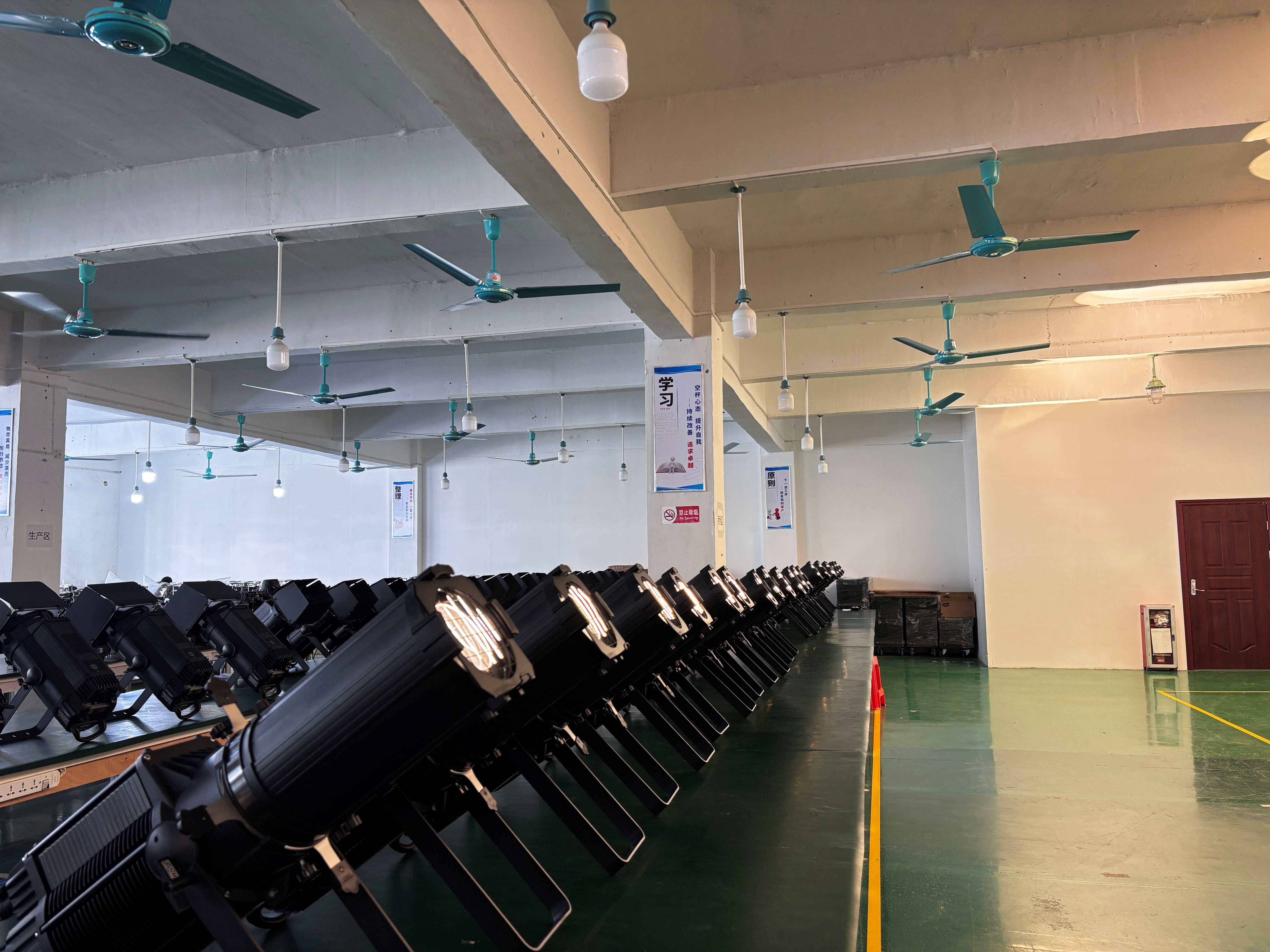
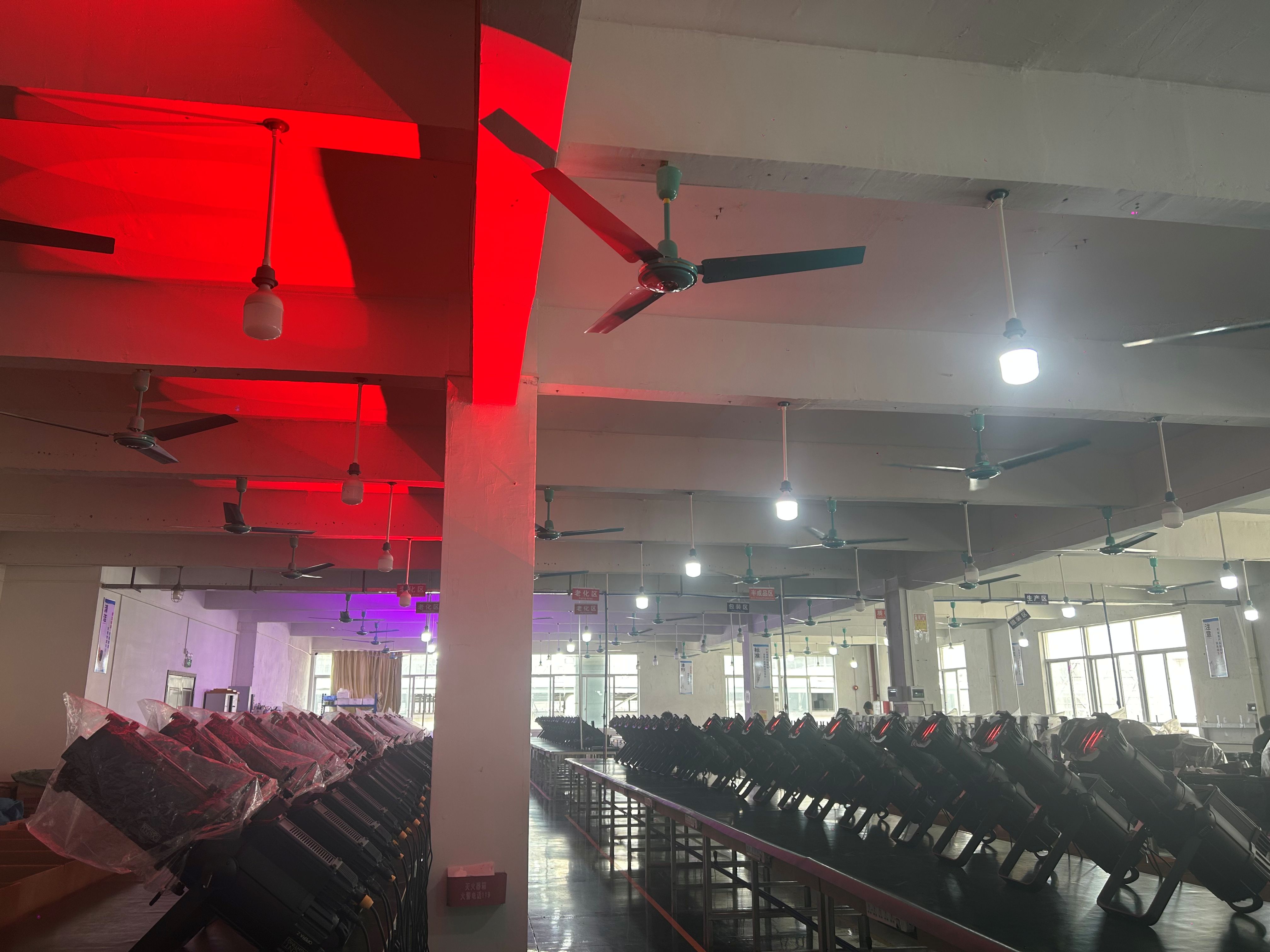
It is useful to understand how the manufacturer manages production and quality control. Kingbird Lighting is a stage lighting manufacturer in Guangzhou, China. Our manufacturing processes include SMT assembly, aging tests, and quality checks at relevant production stages to help maintain product consistency.
When comparing suppliers, ask for relevant product specifications, testing information, warranty terms, and production lead times. These details help you make a more informed decision than price comparison alone.
8. Consider OEM/ODM Options for Lighting Brands and Distributors
For lighting distributors, wholesalers, and professional brands, working with an OEM/ODM manufacturer can provide additional flexibility when developing a product range.
Depending on the fixture and project requirements, customization options may include brand labeling, packaging, housing color, or other agreed product adjustments. Before confirming an order, clarify the technical specifications, minimum order quantity, sample arrangements, production schedule, and available customization options.
Kingbird Lighting supports professional customers looking for stage lighting products and OEM/ODM manufacturing services. Our product range includes Fresnel and profile fixtures in different power ratings and color configurations. Distributors can compare the 400W RGBLAC Fresnel, 400W 2-in-1 Fresnel, 300W Ellipsoidal, and 400W Leko Profile product pages when planning their product selection.
For applications that require full-color output and more controlled beam shaping, the 400W RGBLAC Leko Profile Light is another product to review. The most suitable choice depends on your target market, application requirements, and preferred product configuration.
Common Applications of Theatre Front Lights
LED front lights are used in a wide range of professional and institutional venues, including:
- Professional theatres and performing arts centers.
- School auditoriums and university stages.
- Churches and multipurpose halls.
- Television studios and video production spaces.
- Concert venues and event spaces.
- Lighting rental companies and production businesses.
The most suitable fixture depends on the venue, lighting positions, performance requirements, and budget. A well-planned system may combine soft front lighting with more controlled fixtures to achieve balanced illumination and greater creative flexibility.
Explore Theatre Lighting Products from Kingbird Lighting
Kingbird Lighting offers a range of LED Fresnel and profile lights for professional theatre, studio, and entertainment applications. If you are comparing fixtures for a new installation or expanding your lighting inventory, the following product pages can help you explore different options.
- 400W RGBLAC LED Fresnel Light for applications requiring full-color lighting and adjustable white light.
- LED Fresnel Lights to compare available Fresnel models and configurations.
- 400W 2-in-1 LED Fresnel Light for projects that require adjustable white light.
- 400W 2-in-1 Leko Profile Zoom Light for applications requiring adjustable beam coverage.
- 300W LED Ellipsoidal Lights for controlled theatre and studio lighting.
- 400W LED Leko Profile Lights for applications requiring precise beam shaping.
- 400W RGBLAC Leko Profile Light for full-color lighting with controlled beam shaping.
Kingbird Lighting is a stage lighting manufacturer based in Guangzhou, China, with over 12 years of OEM/ODM experience. Contact our team to discuss product specifications, customization options, and lighting solutions for your project.
Conclusion
Choosing the right theatre front lights requires more than selecting a fixture with sufficient wattage. Beam angle, throw distance, color temperature, CRI, dimming performance, operating noise, and build quality all influence the final lighting result.
For theatres, studios, schools, and professional lighting suppliers, the best choice is the fixture that meets the venue's actual requirements and provides reliable performance over time. Reviewing technical data and testing the equipment in realistic conditions can help reduce purchasing risks.
Kingbird Lighting provides LED Fresnel and profile lighting solutions for professional applications. Explore our product range to compare different fixture types, or contact us to discuss your requirements for theatre front lighting and OEM/ODM manufacturing.
Frequently Asked Questions
What are theatre front lights used for?
Theatre front lights illuminate performers from the audience side of the stage, helping make facial expressions, costumes, and movements easier to see. They are commonly used in theatres, auditoriums, churches, and studios.
Which lights are best for theatre front lighting?
LED Fresnel lights are often suitable for soft, even illumination, while LED profile lights provide more precise beam control. The best option depends on the stage layout and the desired lighting effect. You can compare the LED Fresnel Lights range with the LED Ellipsoidal Lights range to evaluate the available options.
What CRI should theatre front lights have?
For many professional theatre applications, CRI 90 or higher is a useful starting point. Television and video production may require additional evaluation of color quality and camera performance.
Are LED front lights suitable for television studios?
Yes. Suitable fixtures should provide appropriate color rendering, stable color performance, smooth dimming, and sufficiently low noise for the studio environment. Flicker performance should also be tested for camera use.
What is the difference between a Fresnel light and a profile light?
A Fresnel light is generally used to produce soft, blended illumination, while a profile light provides more precise beam shaping. For example, you can compare the 400W RGBLAC Fresnel Light with the 400W RGBLAC Leko Profile Light to explore two different approaches to full-color theatre lighting.
Can Kingbird Lighting provide OEM/ODM services?
Yes. Kingbird Lighting provides OEM/ODM services for professional customers. Depending on the product and project, options may include brand labeling, packaging, housing color choices, and agreed product customization.
 How to Choose LED Panel Lights for Theatre and Studio
 How to Choose the Right Theatre Fresnel Light
 How to Choose the Right Theatre Profile Light
 Why LED Panel Lights Are Replacing Traditional Soft Lights in Modern Theatres and Studios
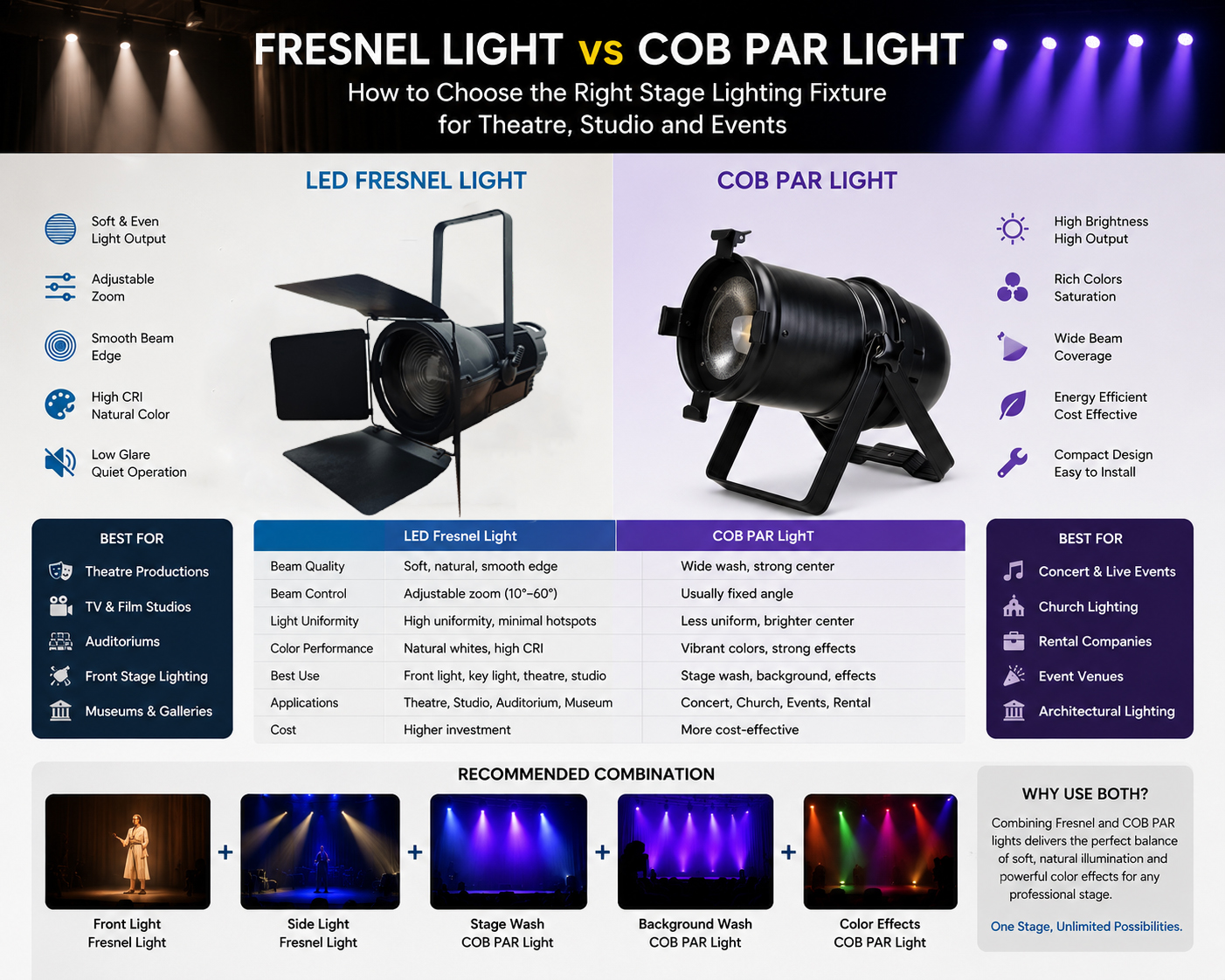 Fresnel vs COB PAR Light: How to Choose the Right Stage Lighting Fixture for Theatre, Studio and Events
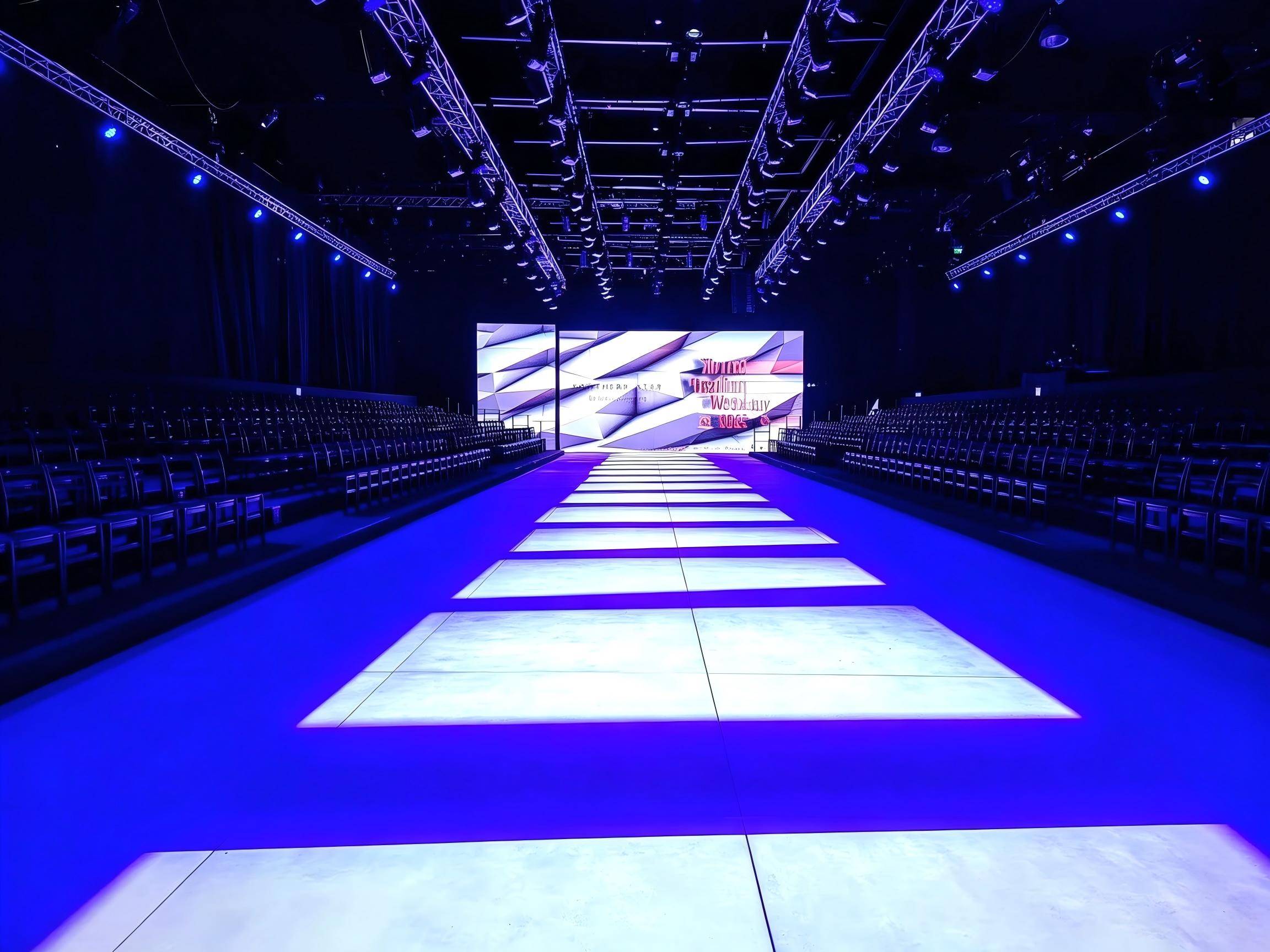 Leko Profile Lights: The Runway Standard for Fashion Shows
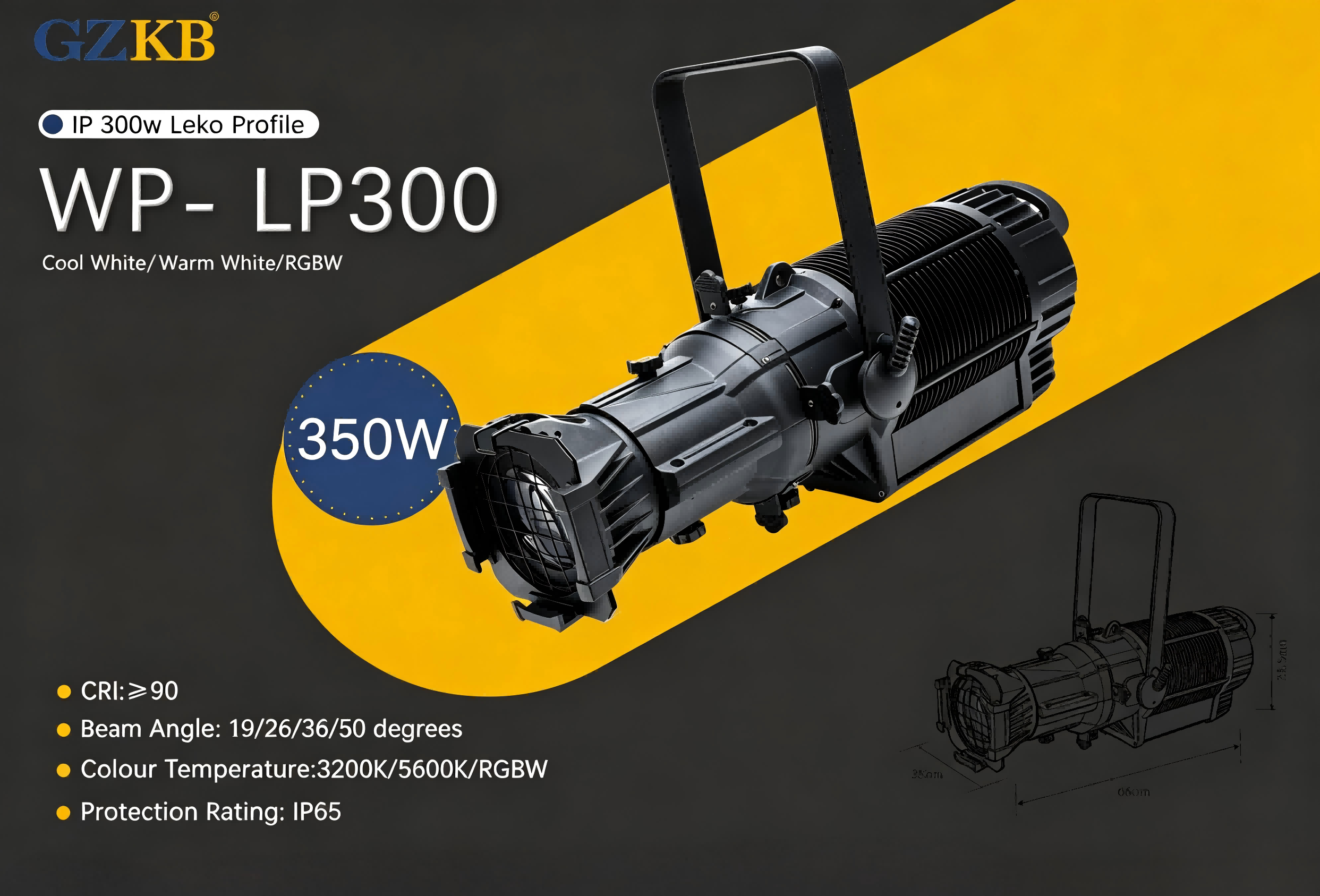 The Profile & Fresnel Series: Upgraded Theatre Lights from Kb Lighting
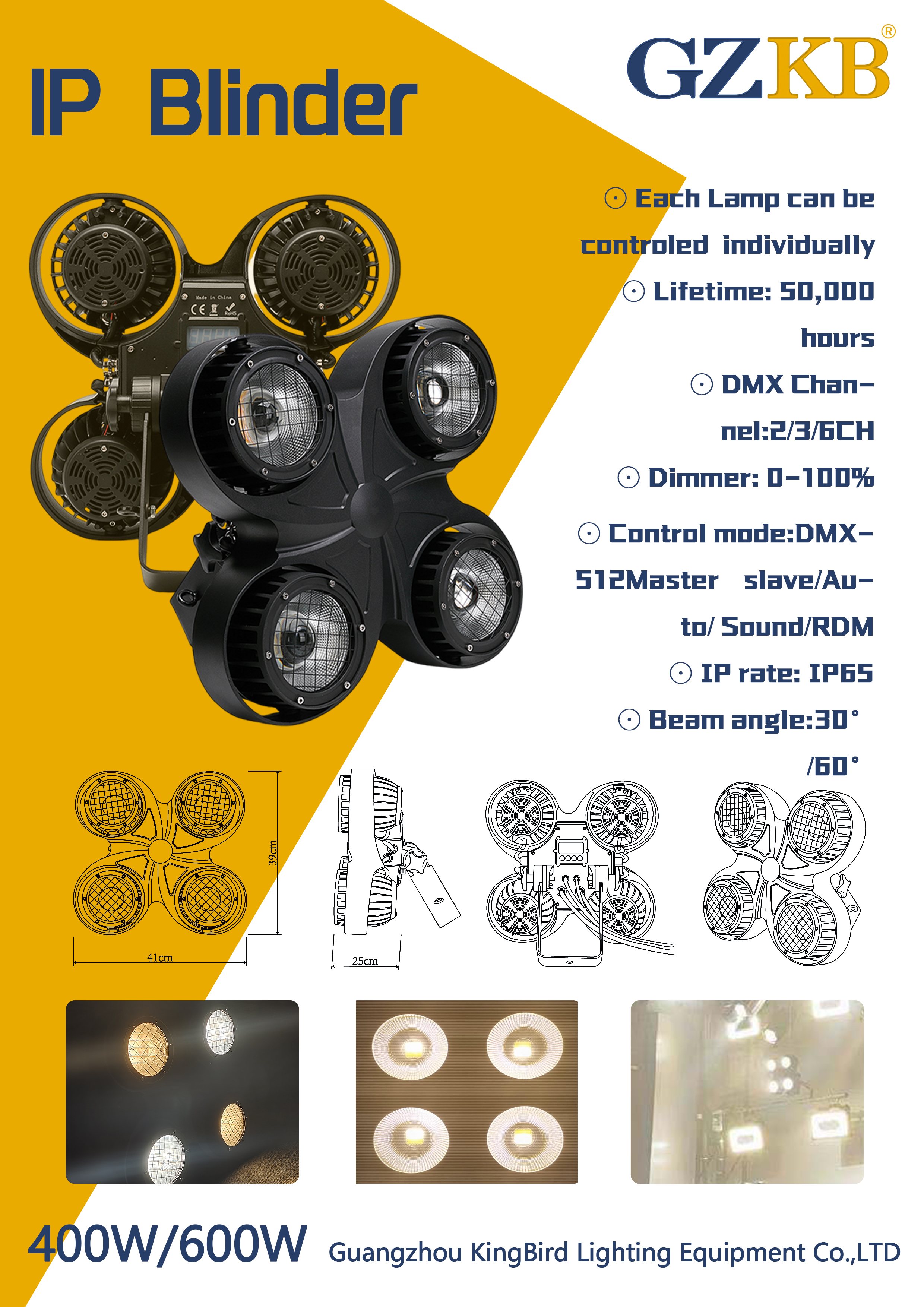 4 Common LED Blinder Problems (And How KB Lights Solved Them)
 Picking the Perfect LED Moving Head Light
 IP Beam 380
 Blinder RGBAW-Super bright waterproof light
 Stage Lighting with IP COB Line Bar Pixel Light
 The Versatility of Outdoor LED Wash Lights
 RGB Strobe Lights: The Ultimate in Speed and Intensity
 The R Spider: Redefining Blinder Lights for the Modern Stage
 IP Moving Head Lights
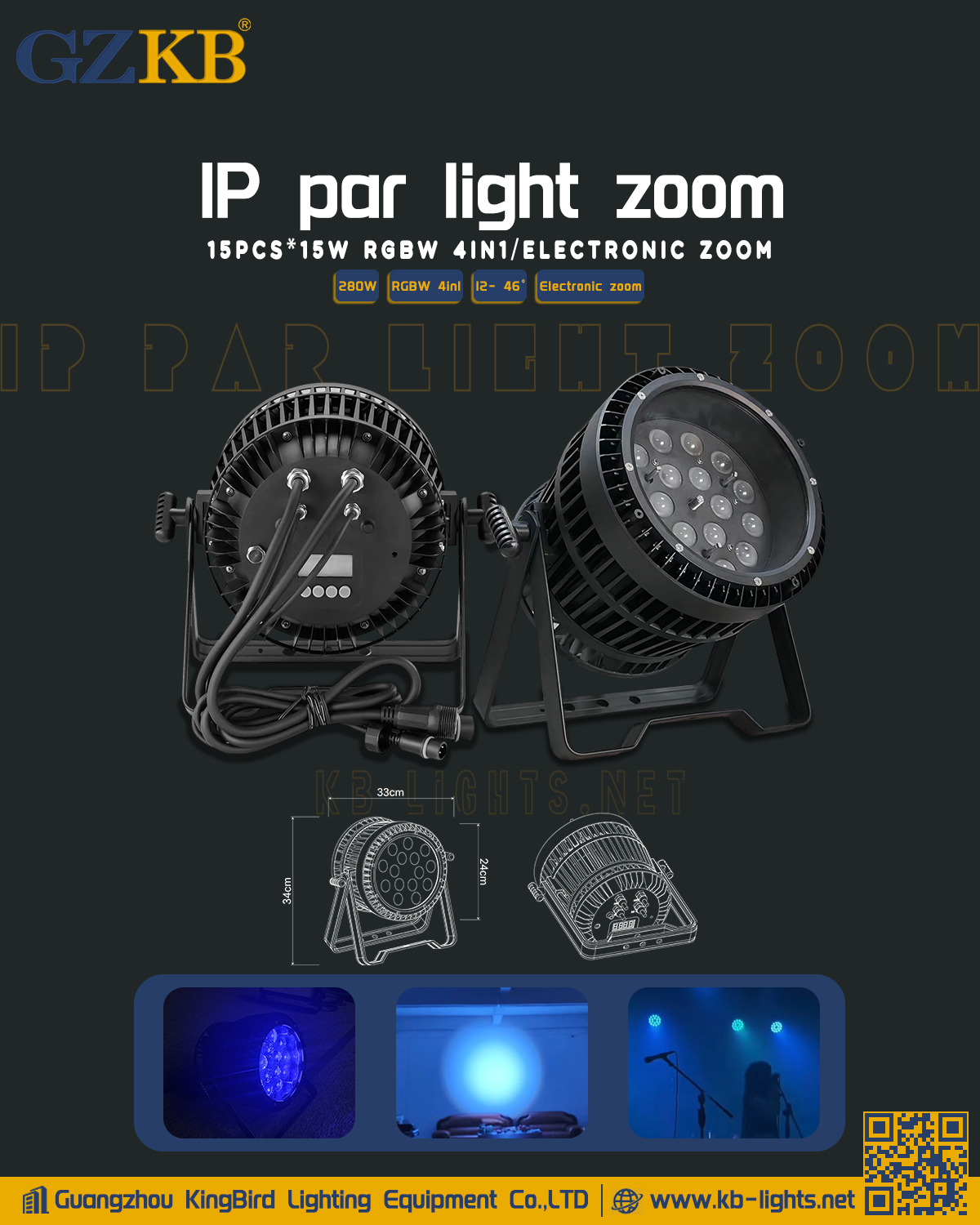 The Power of Illumination: The Zoom PAR Light by KB Lighting
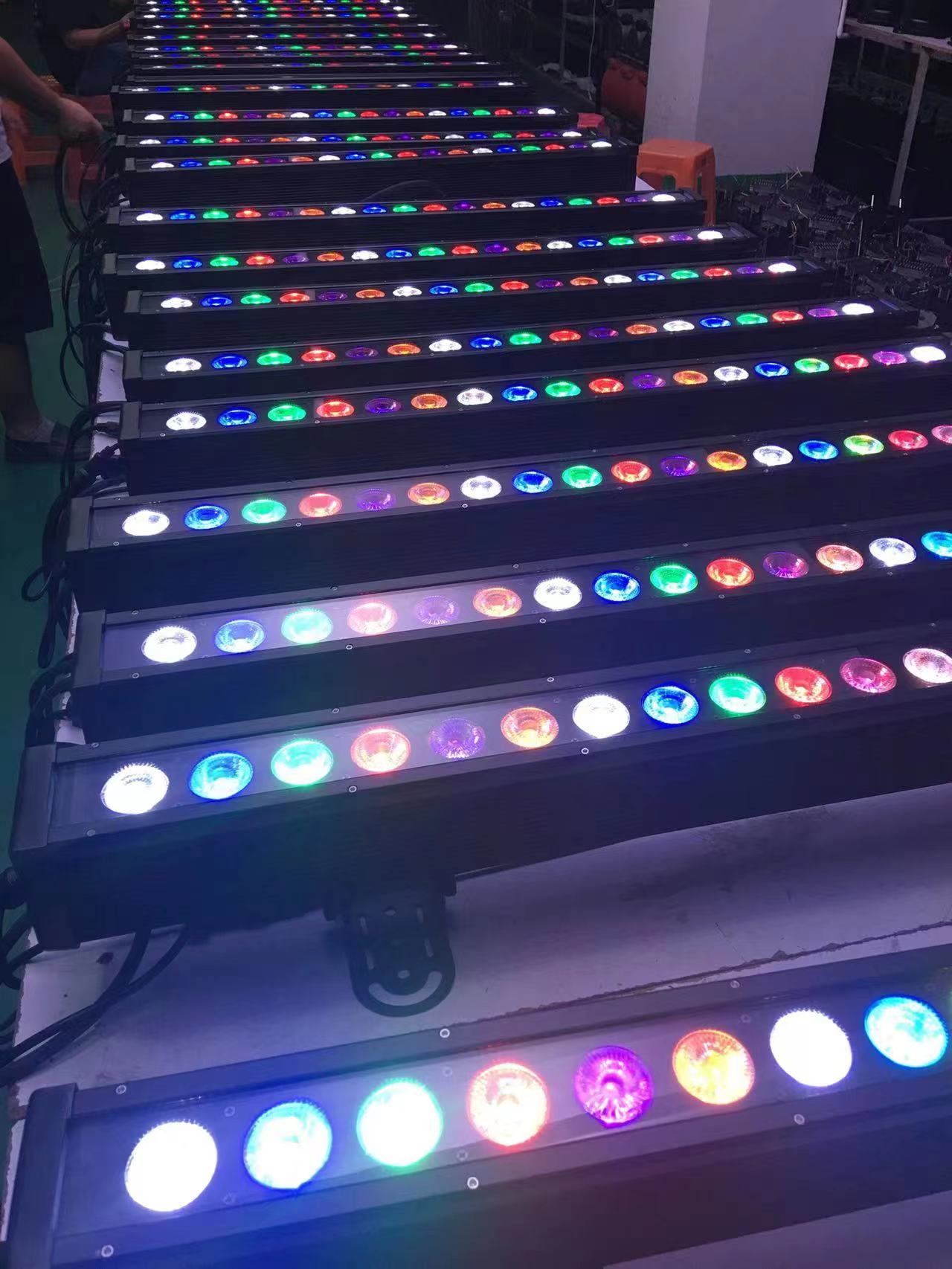 Crafting Ambiance and Energizing Spaces with LED Bar Lights
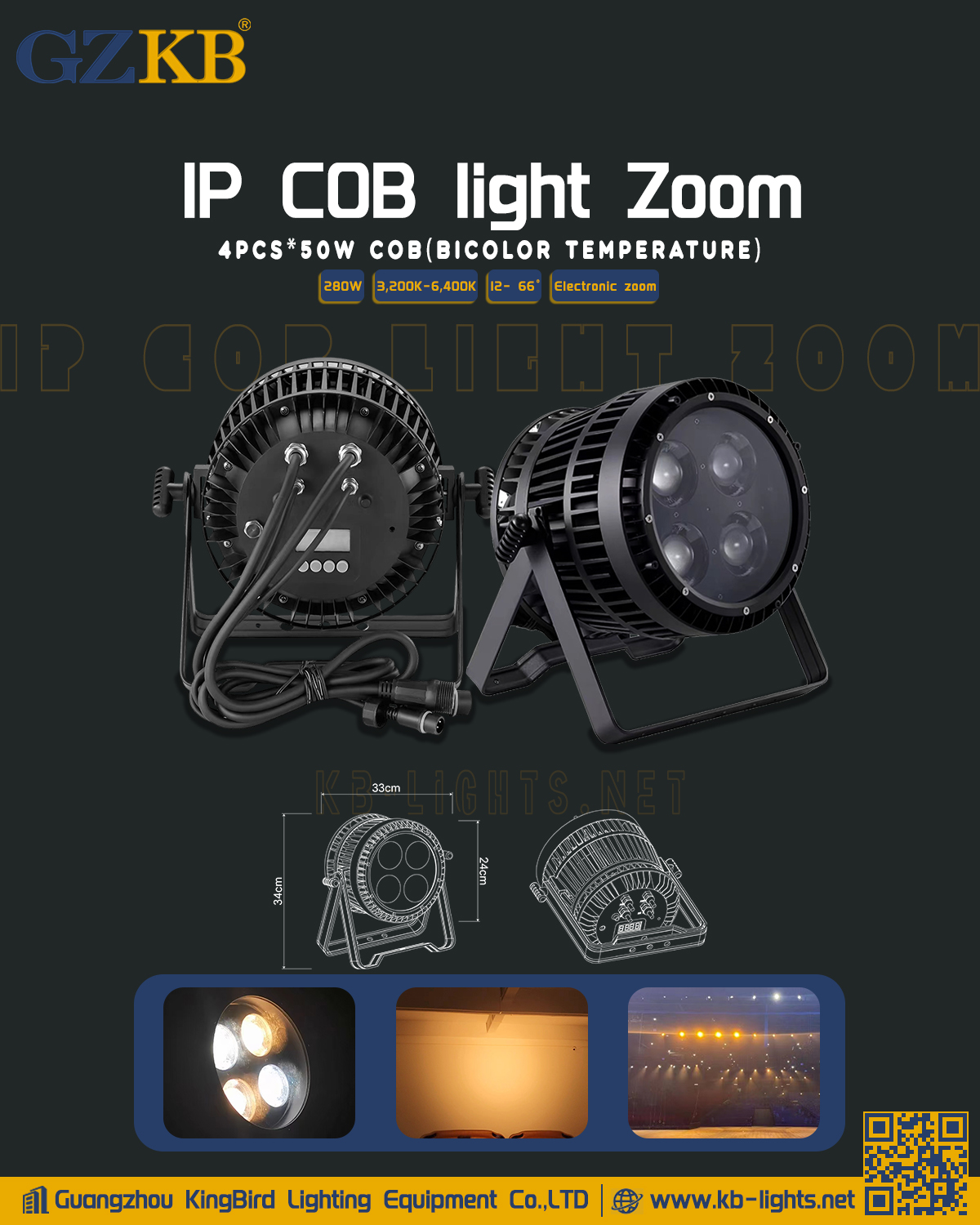 IP COB PAR ZOOM LIGHT
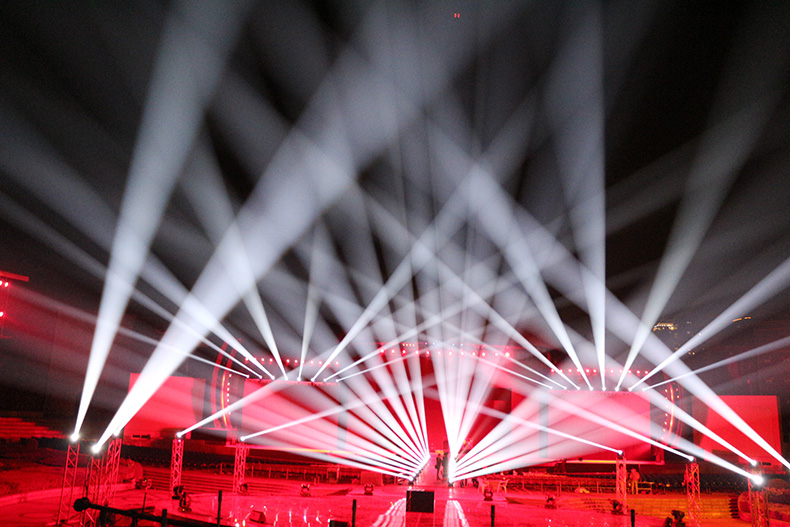 Illuminate Your Stage with the Versatility of Moving Head Lights