







How to Choose LED Panel Lights for Theatre and Studio
How to Choose LED Panel Lights for Theatre and Studio
LED panel lights play an important role in theatres, television studios, auditoriums, churches, and multipurpose venues. They provide broad, even illumination, making them suitable for front lighting and applications where performers need to be clearly visible with natural-looking skin tones. Depending on the color system and optical design, they can also support interviews, video production, live events, and creative stage lighting.
Choosing the right fixture involves more than comparing wattage and price. Light output, color temperature, color rendering, dimming performance, noise, and maintenance all affect the final result. As a stage lighting manufacturer in Guangzhou, China, with over 12 years of OEM/ODM experience, Kingbird Lighting works with customers seeking professional lighting solutions for theatres, studios, and entertainment venues. Understanding the following factors can help you select suitable LED panel lights for your project or product range.

1. Determine the Lighting Requirements
Start by identifying where the panel light will be installed and what it needs to illuminate. Theatre front lighting requires sufficient output to illuminate performers clearly from the front of the stage. Television studios may place greater emphasis on consistent color, smooth dimming, and reliable performance during camera recording.
The size of the venue and the distance between the fixture and the subject also influence the choice. A compact panel may be suitable for a small stage, classroom, interview space, or local auditorium. Larger theatres and professional studios may require higher-output fixtures or multiple units to achieve the desired illumination.
Consider the lighting positions as well. Fixtures used as front light may have different output and color requirements from those used for side lighting, fill lighting, or general stage illumination. Defining these needs before purchasing helps avoid selecting equipment that is either insufficient for the application or unnecessarily powerful.
When evaluating products from Kingbird Lighting or other manufacturers, begin with the actual installation conditions. Sharing the stage dimensions, mounting distance, required beam coverage, and intended use helps narrow down the most appropriate fixture specifications.
2. Choose the Right Color System
The color system determines how a panel light produces white light and colored effects. Different configurations suit different production environments, so buyers should consider the balance between white-light quality, color flexibility, and budget.
Warm White and Bi-Color Panel Lights
Warm white fixtures are suitable for applications that require a consistent warm color appearance. They can work well in theatres, churches, and venues where lighting designs primarily use a fixed white-light tone.
Bi-color LED panel lights combine warm-white and cool-white LEDs, allowing operators to adjust the color temperature according to the scene or environment. This flexibility is useful when a venue needs to move between warmer theatrical lighting and cooler white light for presentations, interviews, or video recording.
For theatres and studios used for different types of productions, adjustable white light can reduce the need to keep separate fixtures for different color temperatures. When comparing models, check the available color temperature range and whether sufficient output is maintained across that range.
RGBW and RGBLA Panel Lights
Full-color panel lights offer more creative possibilities. RGBW and RGBLA systems use multiple LED colors to produce a broad range of hues and provide additional flexibility when creating white light. They can be useful in theatres, performance spaces, studios, and event venues where the same fixtures need to support both conventional illumination and dynamic color effects.
The performance of multicolor systems varies by product design. Buyers should review specifications for color temperature adjustment, color mixing, white-light quality, and output. The best choice is not necessarily the fixture with the most color channels, but the one that meets the production's actual requirements.
Kingbird Lighting offers different stage lighting configurations for professional applications. When discussing panel lights with a manufacturer, explain whether your priority is adjustable white light, creative color effects, or a combination of both. This makes it easier to identify a product configuration suited to your market and customers.
3. Check Brightness and Light Distribution
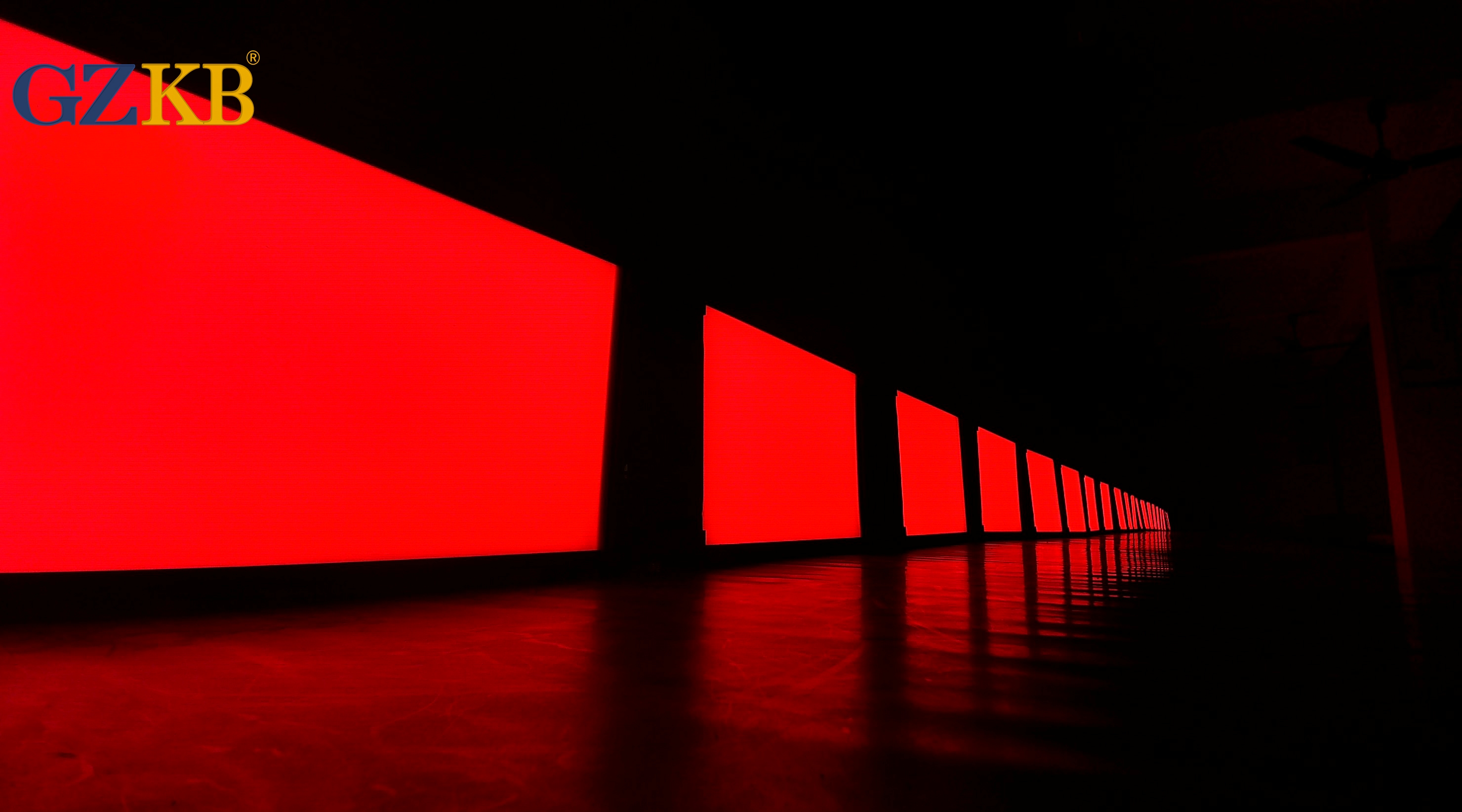
A suitable LED panel should provide enough illumination for the intended distance and area while distributing light evenly. If the output is too low, performers may appear dim or unevenly lit. If the beam does not cover the required area, additional fixtures may be needed to achieve a balanced result.
Wattage alone is not a reliable way to compare brightness. Optical efficiency, LED configuration, beam angle, color settings, and fixture design can all influence usable light output. When possible, compare photometric data, including illuminance at the intended distance and the size of the illuminated area.
For front lighting, even coverage is particularly important when several fixtures illuminate the same performer or stage area. Consider whether the light blends smoothly with adjacent fixtures and whether there are noticeable differences in brightness or color across the stage.
If a venue has several lighting positions or a changing stage layout, consider how the panel's beam spread suits the installation. A fixture that works well at a short distance may not provide the same coverage or intensity from a more distant position. Testing a sample in a representative setup can help confirm whether the output meets expectations.
4. Pay Attention to CRI and Color Quality
Color rendering is important when lighting actors, presenters, costumes, scenery, and objects that will be captured on camera. Poor color reproduction can make skin tones look unnatural and cause colors to appear different from their intended appearance.
For professional theatre and studio applications, a Color Rendering Index (CRI) of 90 or higher is a useful starting point. However, CRI alone does not describe every aspect of color quality. If accurate color reproduction is critical, buyers should also review additional color-rendering data provided by the manufacturer and evaluate the fixture under the intended operating conditions.
For television, streaming, and video production, consistency between fixtures is also important. Multiple lights with visibly different white points or color characteristics can make it harder to maintain a uniform appearance across a scene. When purchasing several units, check whether their output and color performance are consistent.
It is also worth checking flicker performance, especially when fixtures will be used for slow-motion recording, high-frame-rate video, or camera work with demanding shutter settings. Ask for relevant test information rather than assuming every LED fixture will perform equally well on camera.
5. Evaluate Dimming and Control Options
Smooth dimming gives lighting operators better control over transitions, mood, and illumination levels. In theatres, subtle adjustments may be needed during a performance. In studios, operators may need precise changes to balance the lighting on presenters and backgrounds.
Before purchasing, confirm which control options the fixture supports and whether they are compatible with the venue's existing lighting system. DMX control is commonly used in professional stage lighting, but available channels and functions vary between models. Check the product's DMX chart to understand how intensity, color temperature, color mixing, and other functions are controlled.
Dimming quality matters as much as control compatibility. Check whether brightness changes smoothly at low output levels and whether the fixture maintains consistent color as it dims. These details can be important for theatrical scenes, close-up camera work, and environments where lighting changes must remain unobtrusive.
For projects with specific control requirements, provide the manufacturer with the lighting console model and the functions needed. Confirming compatibility before ordering helps reduce commissioning problems after installation.
6. Consider Noise and Thermal Management
Noise can be a significant factor when panel lights are installed in theatres, television studios, recording spaces, and other sound-sensitive environments. A fan that seems quiet in a busy exhibition hall may be noticeable during a quiet scene or an interview recorded with a nearby microphone.
High-output LED fixtures need effective thermal management to support reliable operation. Depending on the design, cooling may involve fans, passive heat dissipation, or a combination of methods. Buyers should consider how the fixture balances cooling performance with operating noise.
If low noise is essential, ask about the manufacturer's noise specifications and test the fixture in a suitable environment. It is also useful to confirm whether a quiet operating mode affects maximum output or other functions. Understanding these trade-offs helps ensure the selected panel is appropriate for the venue.
When comparing suppliers, look beyond the word "silent" in a product description. Ask for clear technical information about cooling design and intended applications so that the equipment can be matched to the actual sound requirements of the project.
7. Evaluate Manufacturing Quality and Reliability
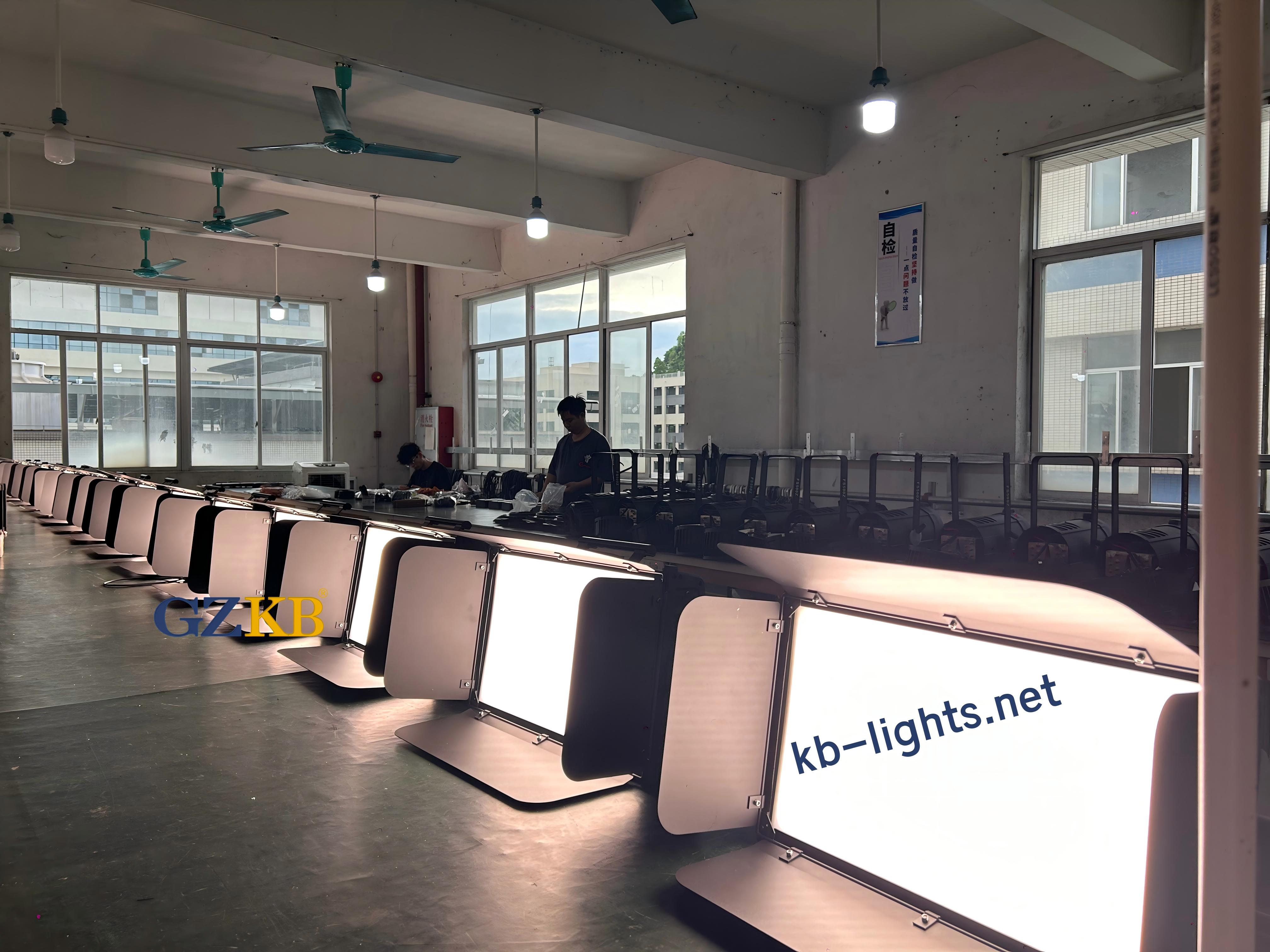
Product specifications are only part of the purchasing decision. Manufacturing processes, component assembly, testing, and quality control can also affect long-term reliability. When evaluating an LED panel light supplier, ask how products are assembled, inspected, and tested before shipment.
Kingbird Lighting is a stage lighting manufacturer based in Guangzhou, China. Its manufacturing processes include SMT assembly, aging tests, and quality checks. These steps are important considerations for professional lighting products, where customers expect consistent performance across repeated use and multiple units.
For distributors and rental companies, consistency between fixtures can be just as important as the specifications of an individual unit. Differences in color, output, or control response can complicate installation and operation when multiple fixtures are used together. Ask the supplier about inspection procedures, technical support, spare parts, and warranty terms before making a purchasing decision.
It is also worth assessing the manufacturer's ability to communicate clearly about specifications and project requirements. A supplier that understands theatre, studio, and entertainment lighting applications can help buyers evaluate whether a product is appropriate for the intended use.
8. Consider OEM/ODM Options for Distributors and Brands
For wholesalers, distributors, and lighting brands, product performance is only one part of a successful partnership. Branding, packaging, product consistency, order planning, and communication with the manufacturer can also influence purchasing decisions.
With over 12 years of OEM/ODM experience, Kingbird Lighting works with customers who need professional stage lighting products and manufacturing support. Depending on the product and project requirements, cooperation may include brand labeling, packaging, housing color options, and selected product customization.
Before confirming an OEM/ODM order, discuss the required specifications, logo artwork, packaging details, minimum order quantities, lead times, quality requirements, and after-sales support. Confirming these details early helps both parties establish realistic expectations and plan production more efficiently.
For businesses developing a new lighting range, it is also useful to consider how the panel lights fit alongside other fixtures in the catalogue. A coherent product range can make it easier to serve different customer groups, from small venues and studios to professional theatre and event production.
Common Applications for LED Panel Lights
LED panel lights can serve different roles depending on their output, color system, and optical design. Common applications include:
- Theatre and stage front lighting
- Television and broadcast studios
- School auditoriums and lecture halls
- Churches and worship venues
- Interviews, presentations, and conference spaces
- Performing arts centers
- Multipurpose event venues
- Lighting rental and production companies
Each application has different priorities. A theatre may need natural skin tones and even stage coverage, while a television studio may require consistent color, reliable dimming, and low noise. Rental companies may place more emphasis on durability, flexibility, and maintenance. Matching the panel light to its main application is the best way to achieve dependable performance.
Conclusion
Choosing the right LED panel light requires more than comparing wattage and purchase price. Light output, distribution, color system, CRI, flicker performance, dimming, operating noise, installation, and maintenance all influence whether a fixture is suitable for a particular venue.
It is equally important to evaluate the manufacturer behind the product. Production processes, quality checks, technical communication, and the availability of OEM/ODM support can all matter when sourcing equipment for a long-term project or a growing product range.
Kingbird Lighting provides professional stage lighting products and OEM/ODM support for customers in theatre, studio, rental, and entertainment lighting markets. If you are sourcing LED panel lights for your venue, distribution business, or lighting brand, contact Kingbird Lighting to discuss your application, technical requirements, and potential cooperation.
Frequently Asked Questions
What are LED panel lights used for in theatres?
They are commonly used for front lighting and broad, even illumination of performers and stage areas. Their suitability depends on the fixture's output, beam distribution, color quality, and installation distance.
What is the difference between bi-color and RGBAL panel lights?
Bi-color fixtures allow adjustment between warm and cool white, while RGBAL fixtures provide a broader range of colors and additional creative flexibility. The best choice depends on whether the application prioritizes adjustable white light, color effects, or both.
What CRI is recommended for theatre LED panel lights?
A CRI of 90 or higher is a useful starting point for professional theatre and studio lighting. For camera-based productions, color consistency and flicker performance should also be evaluated.
Are LED panel lights suitable for television studios?
Yes. Models with good color rendering, consistent output, suitable dimming performance, and low operating noise can be suitable for television and video production. Always check camera performance for the intended recording conditions.
What should rental companies consider when buying LED panel lights?
Rental companies should evaluate output, color flexibility, control compatibility, durability, portability, maintenance requirements, spare-part availability, and long-term operating costs. Reliable quality across multiple fixtures is also important for consistent results at different events.
Can Kingbird Lighting provide OEM/ODM services?
Kingbird Lighting offers OEM/ODM cooperation for professional stage lighting products. Depending on the model and project requirements, options may include branding, labels, packaging, and selected customization. Contact the team to confirm the available options for your project.
 How to Choose the Right Theatre Fresnel Light
  How to Choose the Right Theatre Profile Light
  Why LED Panel Lights Are Replacing Traditional Soft Lights in Modern Theatres and Studios
 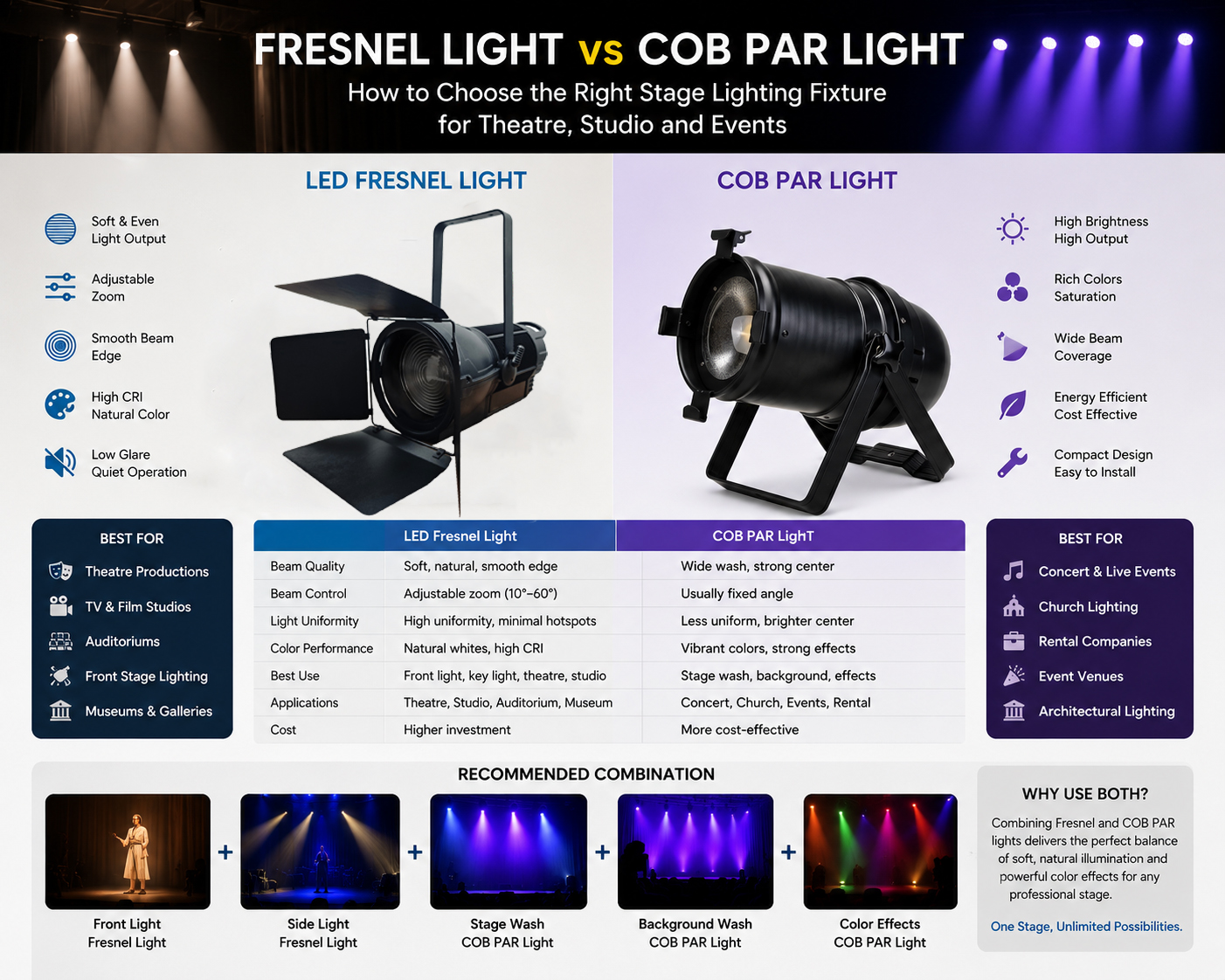 Fresnel vs COB PAR Light: How to Choose the Right Stage Lighting Fixture for Theatre, Studio and Events
 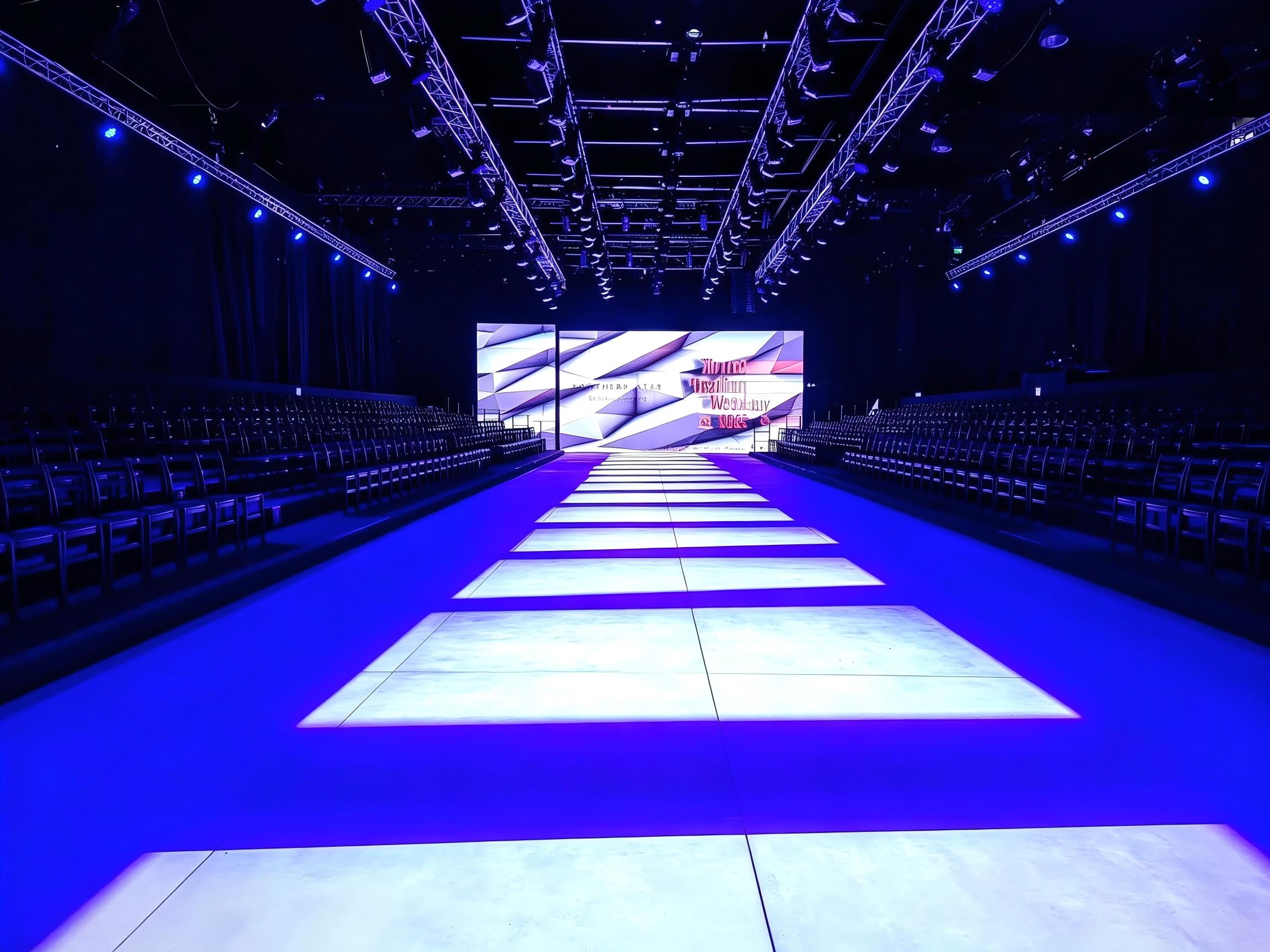 Leko Profile Lights: The Runway Standard for Fashion Shows
 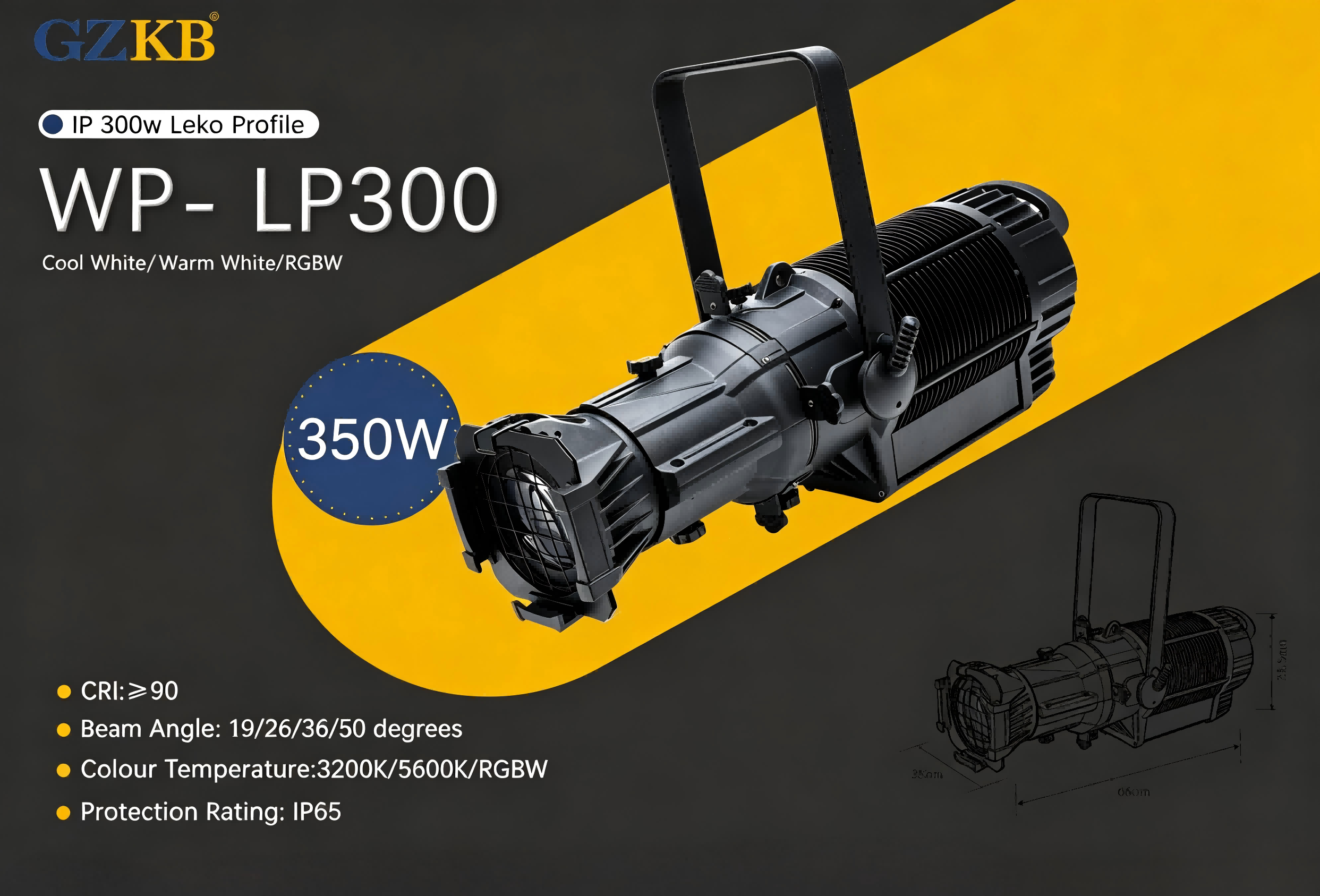 The Profile & Fresnel Series: Upgraded Theatre Lights from Kb Lighting
 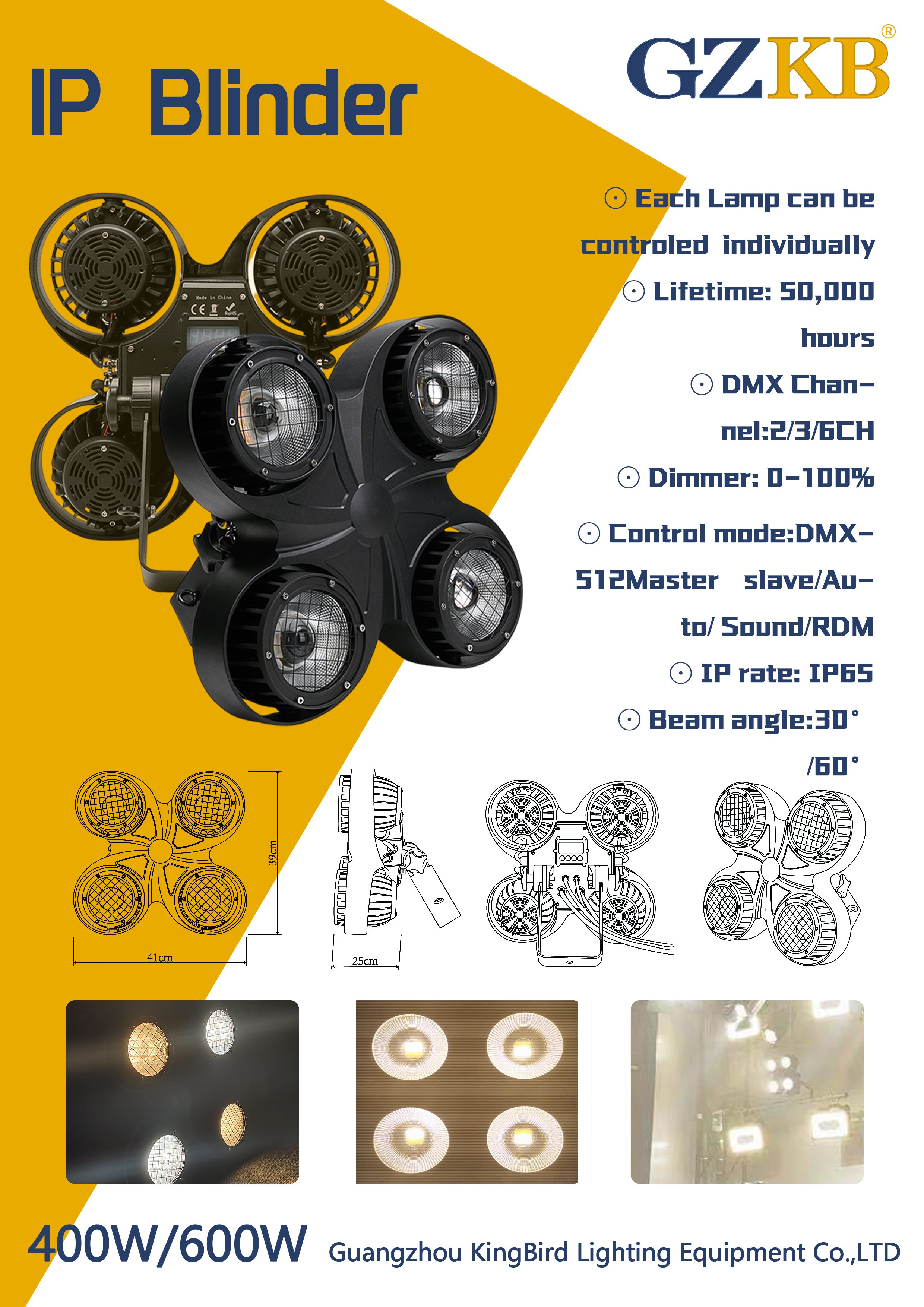 4 Common LED Blinder Problems (And How KB Lights Solved Them)
 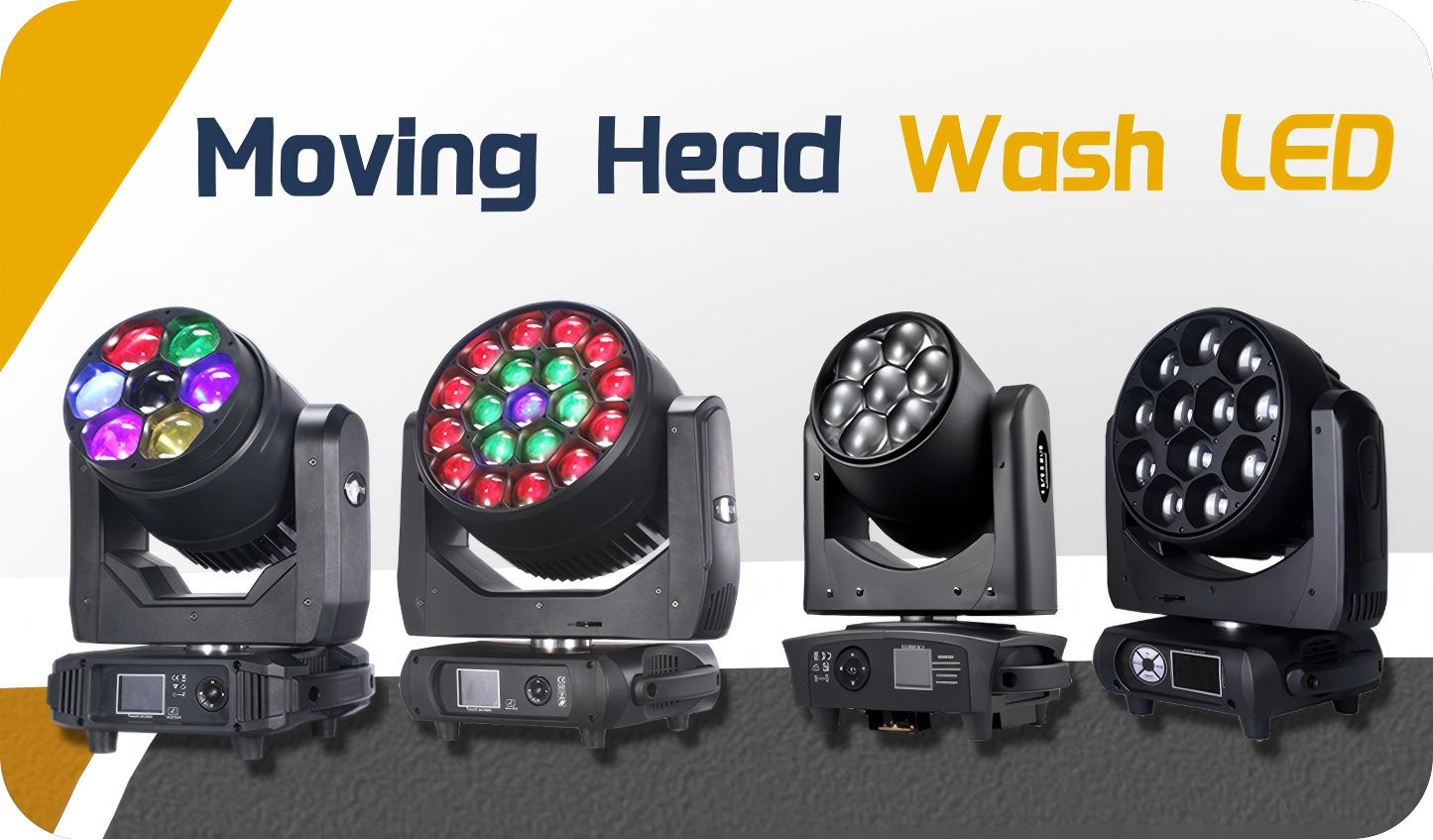 Picking the Perfect LED Moving Head Light
  IP Beam 380
 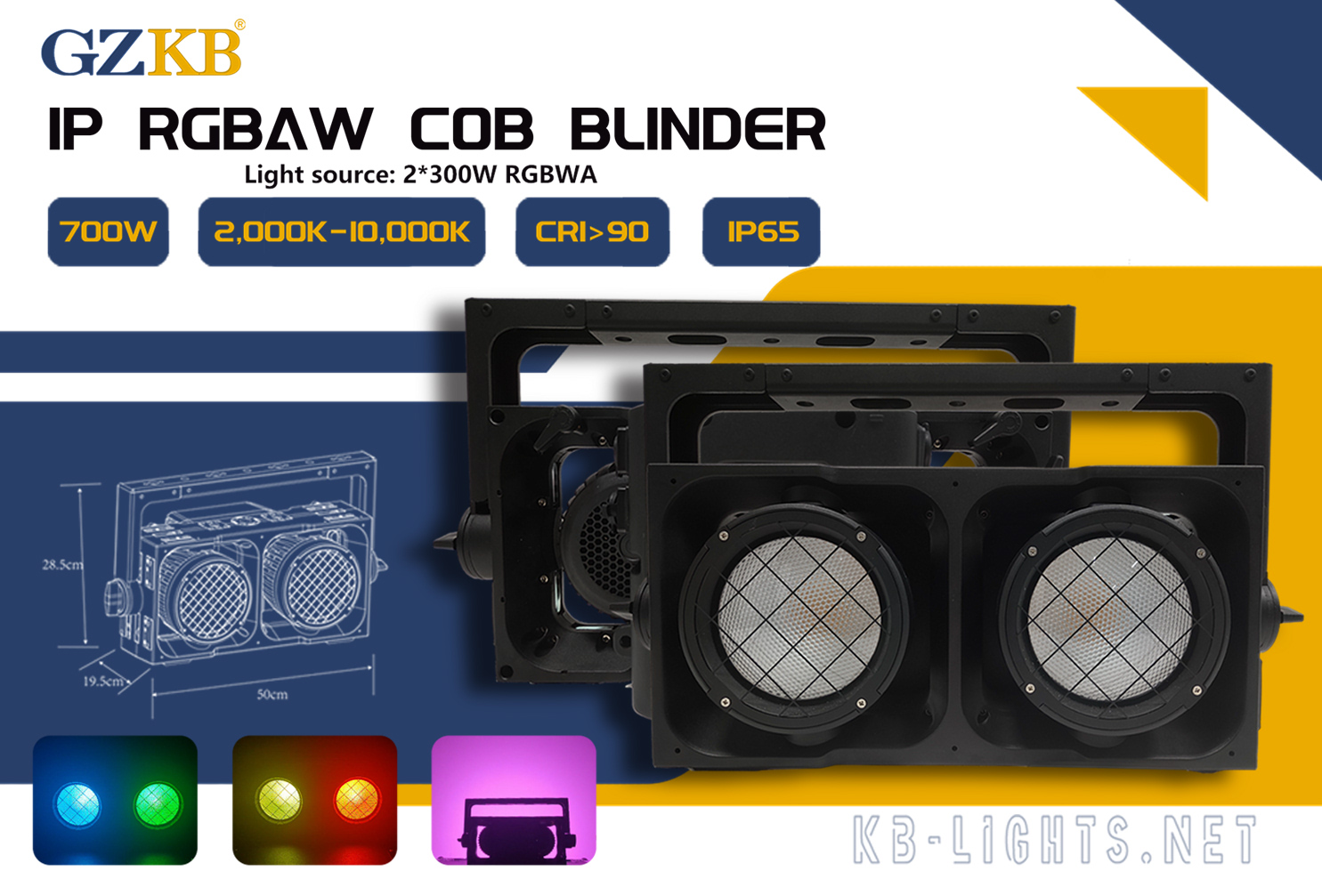 Blinder RGBAW-Super bright waterproof light
  Stage Lighting with IP COB Line Bar Pixel Light
  The Versatility of Outdoor LED Wash Lights
 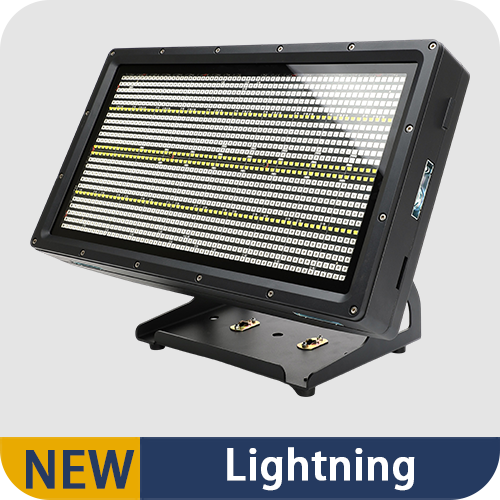 RGB Strobe Lights: The Ultimate in Speed and Intensity
 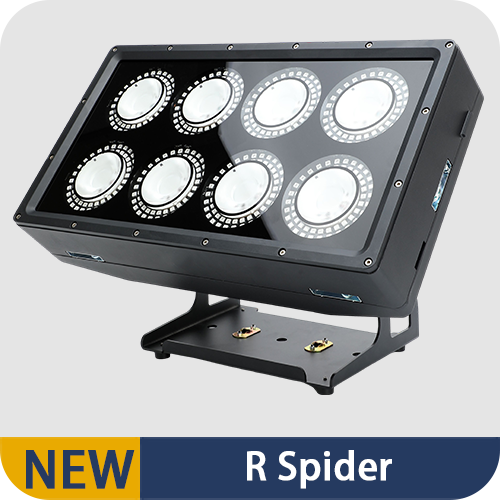 The R Spider: Redefining Blinder Lights for the Modern Stage
 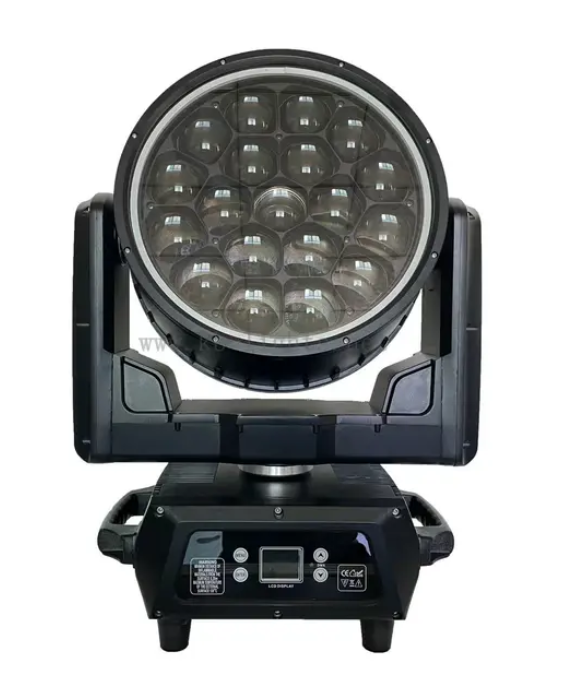 IP Moving Head Lights
 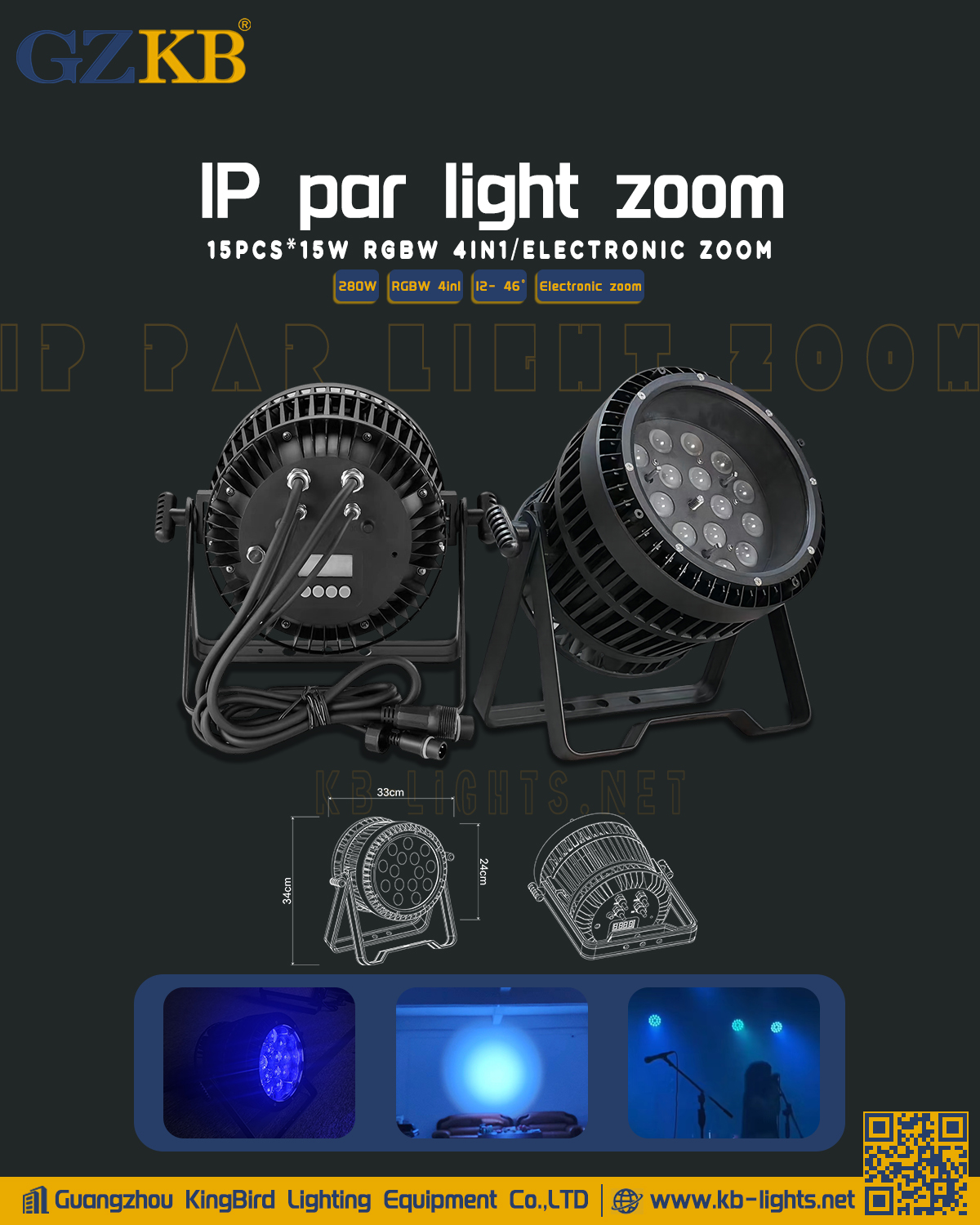 The Power of Illumination: The Zoom PAR Light by KB Lighting
 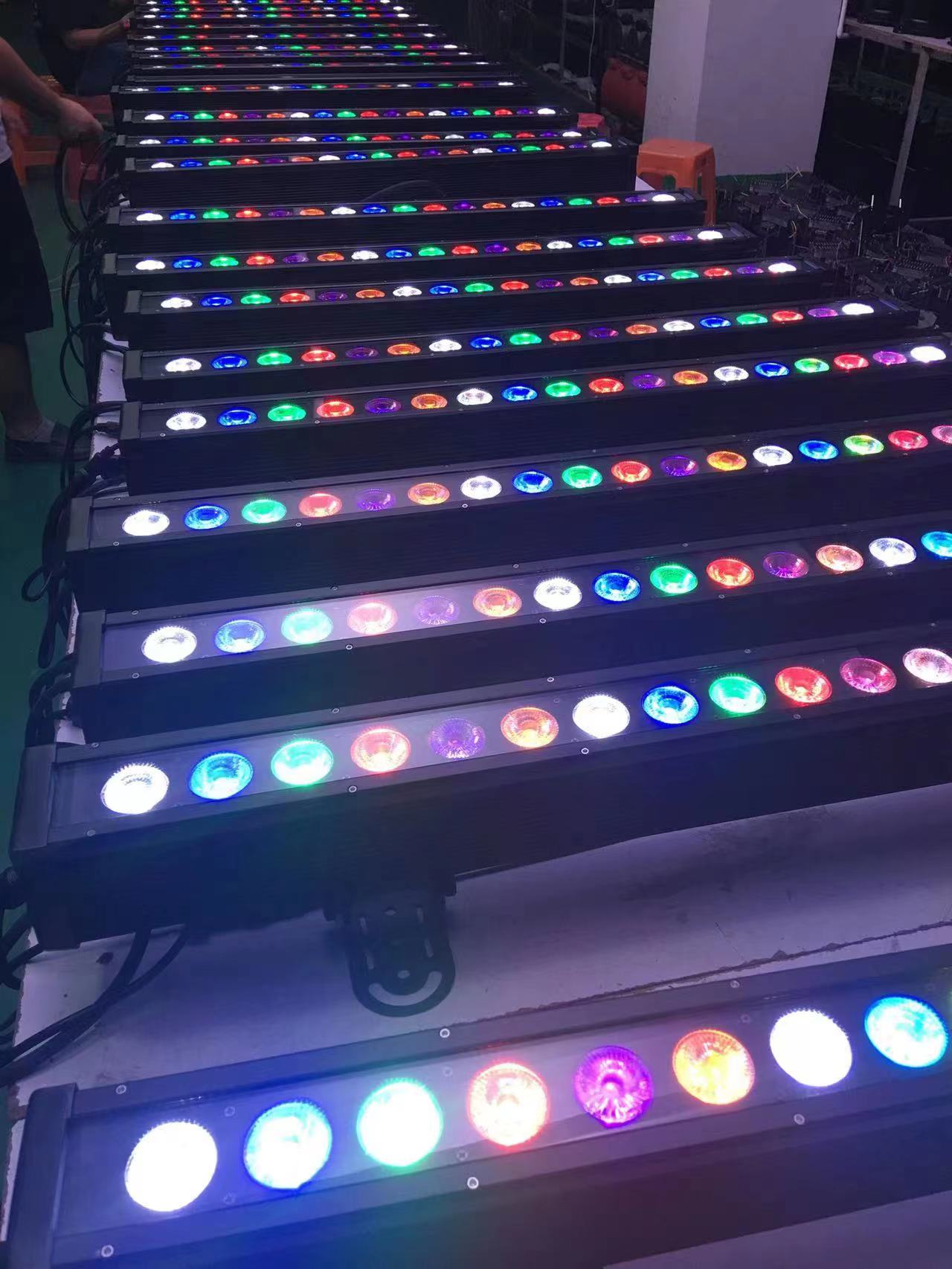 Crafting Ambiance and Energizing Spaces with LED Bar Lights
 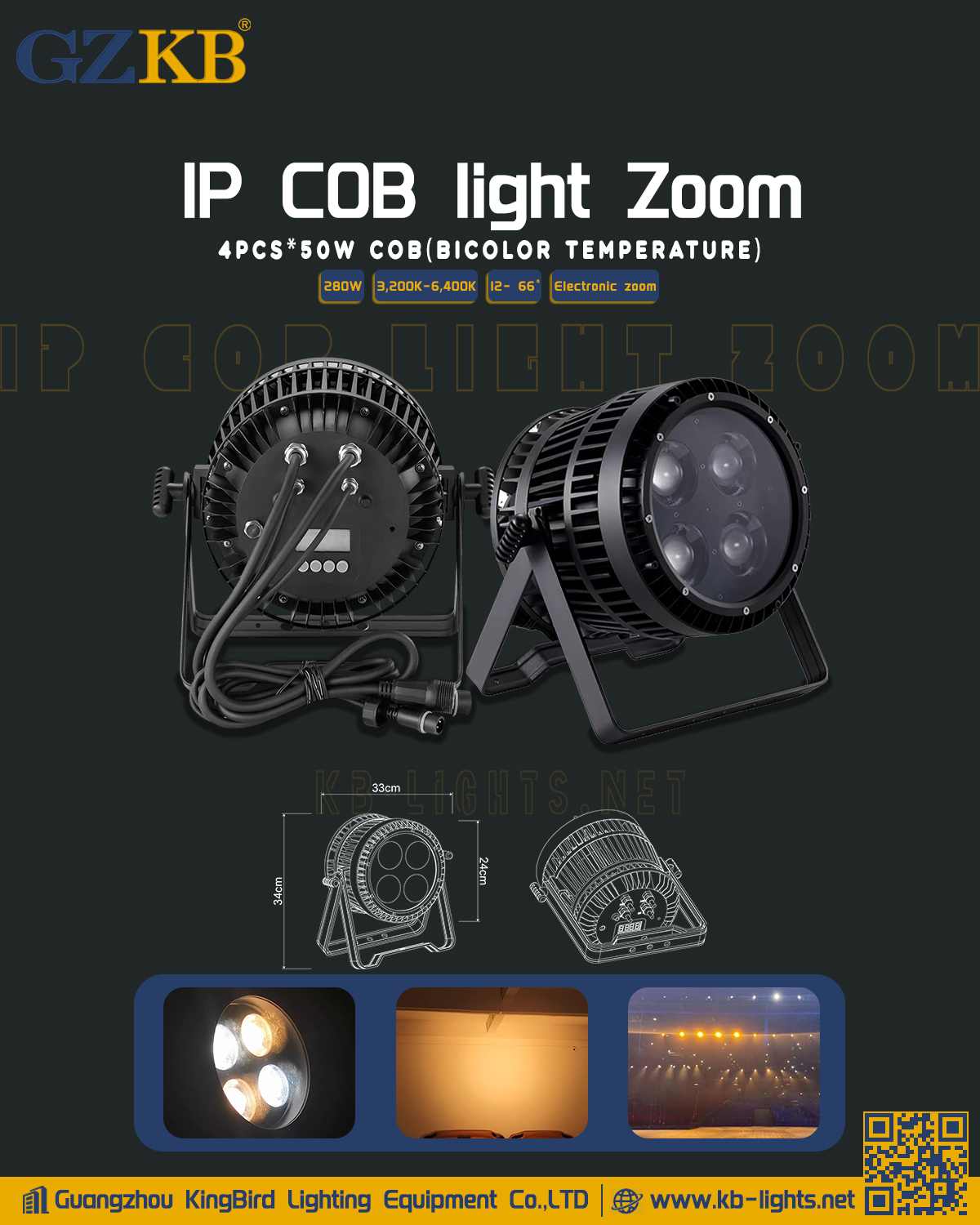 IP COB PAR ZOOM LIGHT
  Illuminate Your Stage with the Versatility of Moving Head Lights
 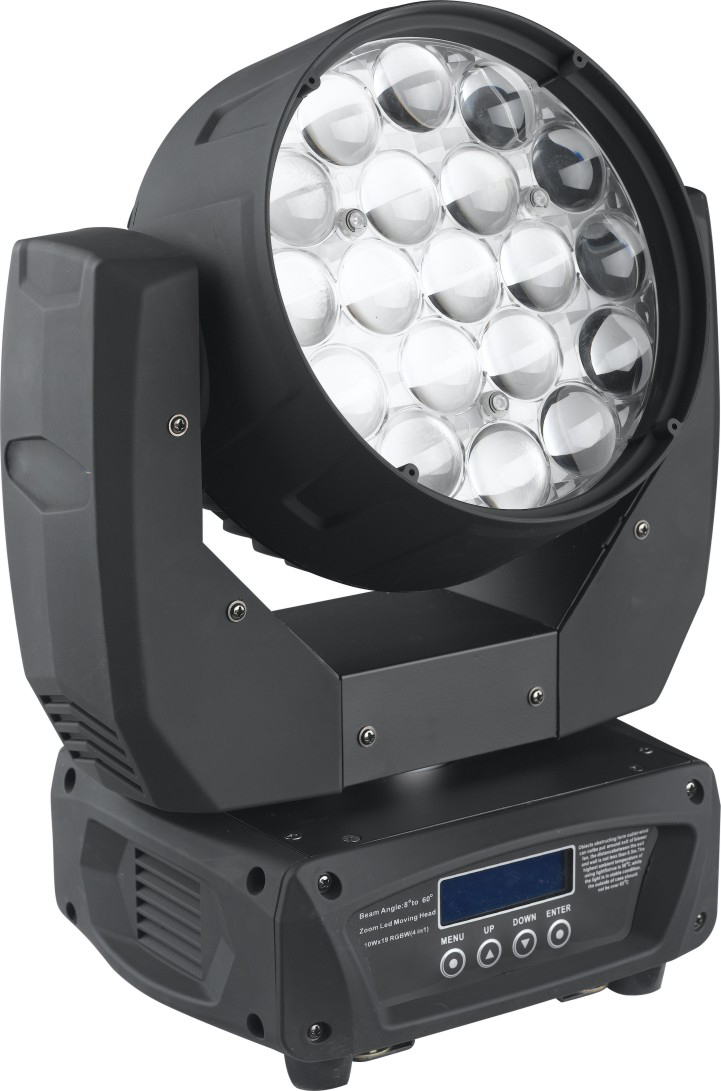 The 1915Aura Moving Head Light